

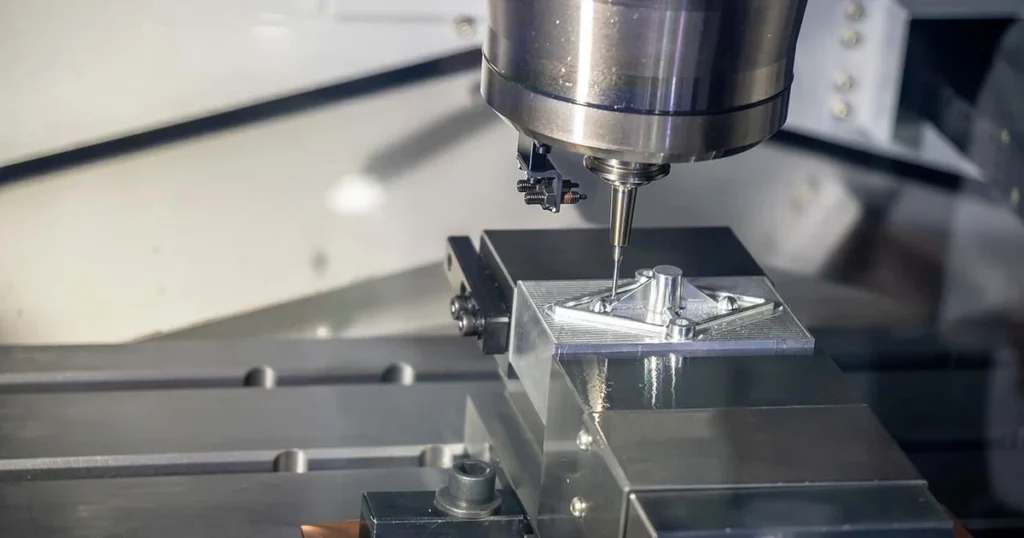
Deciding between casting vs CNC machining for your next production run? Compare costs, tolerances, lead times, materials, and volume break-even points to select the right process. Request an instant quote from Lava3DP today.
When selecting the manufacturing process for metal components, comparing casting vs CNC machining is a fundamental engineering decision. Both technologies turn raw metals into functional finished goods, yet their operational physics, financial models, and geometric boundaries differ completely. Selecting the wrong path can inflate unit costs, create lead time bottlenecks, or force costly redesigns late in development.
What Is Casting?
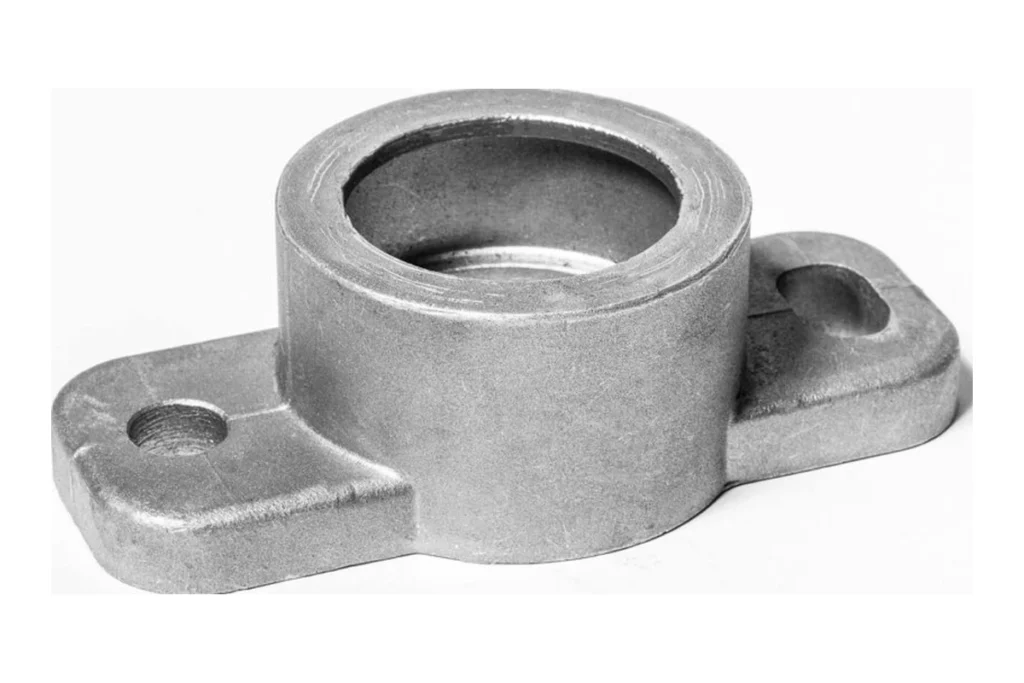
Casting is a formative manufacturing technology where liquid metal flows into a hollow cavity mold under gravity or pressure. Once cooled and solidified, the metal adopts the shape of the mold cavity. Foundry workers break or open the mold to remove the raw component, which typically undergoes cleaning, riser removal, and finishing steps.
How the Metal Casting Process Works
The process starts with building a pattern that mirrors the desired external geometry. Workers pack refractory sand, ceramic paste, or steel dies around this pattern to construct the mold. High-temperature furnaces melt raw ingots or scrap metal until the alloy reaches its pouring temperature.
After liquid metal fills the cavity, thermal conduction pulls heat away, solidifying the structure from the walls inward. Controlling heat transfer prevents internal voids, hot tears, or shrinkage defects.
Common Casting Methods for Custom Parts
- Sand Casting: Refractory sand mixed with bonding agents creates reusable or single-use molds. Ideal for massive structural frames, engine blocks, and low-to-medium production runs.
- Investment Casting: Also known as lost-wax casting, this technique uses wax models dipped in ceramic slurry. After firing the ceramic shell to melt out the wax, molten alloy fills the precise cavity.
- Die Casting: High-pressure hydraulic presses force molten metal into hardened steel dies. This process suits high-volume non-ferrous components requiring thin walls and repeatable dimensions.
When Casting Is the Right Manufacturing Choice
Casting excels when producing complex internal cavities, organic curved surfaces, or heavy structural components where cutting solid block material would generate excessive scrap. When comparing die casting vs CNC machining, casting becomes the obvious winner for thin-walled housings produced in the tens of thousands.
Related: CNC Milling vs CNC Turning: Differences, Cost, Tolerances, Applications & Which Is Better? (2026)
What Is CNC Machining?
CNC machining is a digital subtractive manufacturing method. Computer-numerical-control machine tools read G-code instructions to cut away unwanted material from a solid block, bar, or billet.
How CNC Machining Works
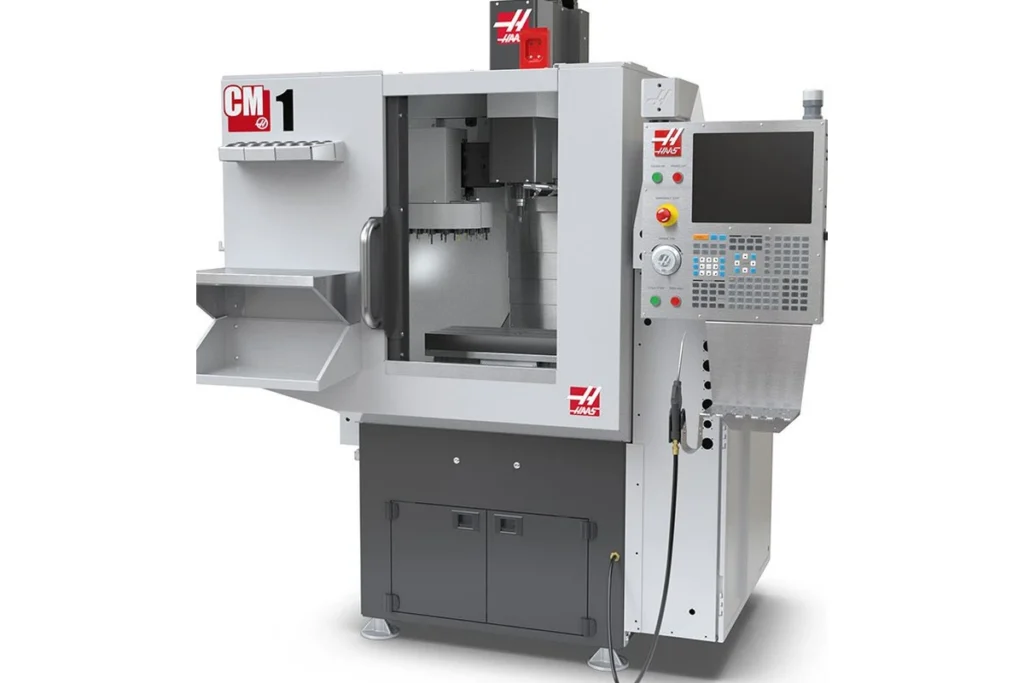
Designers upload a 3D CAD file into Computer-Aided Manufacturing (CAM) software to construct toolpaths, spindle speeds, and feed rates. The CNC machine holds the raw metal billet in a vice or custom fixture. High-speed carbide or diamond-coated tools then shear chips off the stock until the exact 3D geometry remains.
Common CNC Machining Operations
- CNC Milling: Rotating multi-flute cutting tools move across 3, 4, or 5 axes to carve flat surfaces, slots, pockets, and complex 3D contours.
- CNC Turning: The metal workpiece rotates at high RPM while a stationary cutting tool profiles external diameters, threads, bores, and faces.
- EDM and Drilling: Electrical discharge machining and specialized drilling heads create deep micro-holes or hard-metal profiles that traditional cutters cannot reach.
When CNC Machining Is the Better Choice
Selecting machining vs casting makes sense when your design demands tight dimensional tolerances, sharp internal corner profiles, or flat sealing faces without high upfront tooling investments. It provides maximum design agility since changing a dimension only requires tweaking CAD parameters and updating CAM code.
Related: 5 Axis CNC Machine: Complete Guide to 5-Axis CNC Machining, Cost, Benefits & Applications (2026)
Casting vs CNC Machining: Key Differences
Evaluating how casting and CNC Machining compare side by side helps engineers balance cost, speed, and functional requirements.
| Performance Metric | Metal Casting (Die / Investment / Sand) | CNC Machining (3 to 5-Axis) |
| Dimensional Accuracy | +/-0.1 mm to +/-0.5 mm | +/-0.005 mm to +/-0.025 mm |
| Surface Roughness (Ra) | 1.6 to 12.5 micrometers | 0.4 to 1.6 micrometers |
| Upfront Tooling Cost | High ($2,000 to $50,000+) | Very Low ($0 to $500 for fixtures) |
| Unit Cost at Low Volume | High (tooling amortization) | Low to Moderate |
| Unit Cost at High Volume | Very Low | Moderate to High |
| Lead Time (First Article) | 4 to 12 Weeks | 2 to 7 Days |
| Material Utilization | High (80% – 95%) | Moderate to Low (20% – 60%) |
Casting vs CNC Machining Cost
When evaluating casting vs CNC machining cost, total expenditure splits into non-recurring engineering (NRE) tooling fees and individual per-part costs. Casting demands substantial initial investments for patterns, dies, or wax tooling. CNC machining relies on existing machine axes and standard cutting tools, resulting in negligible upfront setup expense.
Dimensional Accuracy and Tolerances
Comparing casting vs CNC machining tolerance capabilities highlights a major operational split. Standard CNC milling routinely hits tight limits of +/-0.012 mm, whereas casting vs CNC machining tolerances for sand or investment methods range between +/-0.2 mm and +/-0.5 mm. High precision requirements almost always favor subtractive cutting.
Surface Finish
Looking at casting vs CNC machining surface finish, raw cast parts display textured, grainy finishes (Ra 3.2 to 12.5 um) caused by sand granules or ceramic mold linings. In contrast, casting vs CNC machining surface finish comparisons show CNC tools achieving smooth Ra 0.8 um surfaces straight off the mill.
Material Selection
For casting vs CNC machining material selection, CNC equipment can process almost any commercial metal billet, including titanium, hardened tool steel, aircraft aluminum, and brass. Casting requires metals with specific fluidity, melting ranges, and solidification properties, limiting alloy options.
Production Volume
Analyzing casting vs CNC machining production volume reveals clear financial break-even points. CNC routing dominates prototypes and small batches under 500 units. High volume orders over 5,000 pieces justify permanent mold tooling, making foundry runs significantly more economical.
Lead Time and Tooling
Comparing casting vs CNC machining lead time shows a clear speed advantage for subtractive fabrication. Machining a billet takes days because CAM programming starts immediately. Casting requires weeks to design, machine, and test steel dies or foundry patterns before pouring the first unit.
Design Complexity and Part Geometry
In casting vs CNC machining design requirements, casting handles enclosed internal hollows and undercut channels with core inserts easily. Machining struggles with deep narrow pockets or internal chambers due to tool reach constraints and cutter vibration.
Casting vs CNC Machining Materials
Material behavior dictates process selection. Shrinkage rate, machinability index, thermal conductivity, and melt temperature all influence manufacturing feasibility.
| Alloy Category | Formable Cast Alloys (Casting) | Machinable Billet Stock (CNC Machining) |
| Aluminum | A380, A356, ADC12 | 6061-T6, 7075-T6, 2024-T3 |
| Steel & Iron | Ductile Iron, Gray Iron, 316 Cast Steel | 304, 316L, 4140, 17-4 PH Stainless |
| Copper & Brass | C83600 Cast Bronze, C84400 Brass | C360 Free-Cutting Brass, Tellurium Copper |
| Exotic Alloys | Inconel 718 (Investment Cast) | Titanium Grade 5 (Ti-6Al-4V), Hastelloy |
Related: Rapid Tooling: Complete Guide to Prototype Tooling, Bridge Molds & Rapid Injection Molding (2026)
Aluminum
The debate between cast aluminum vs CNC machined aluminum centers on mechanical density and grain structure. Cast grades like A380 or A356 allow complex heat-sink fins and automotive housings. Extruded or forged billets like 6061-T6 or 7075-T6 used in machining offer higher tensile strength and zero internal porosity.
In aluminum die casting vs CNC machining, die-cast aluminum delivers high throughput for complex shapes, while machined aluminum provides superior structural integrity for load-bearing brackets.
Stainless Steel and Carbon Steel
In steel casting vs CNC machining, casting works well for heavy valve bodies and pump impellers made of 316 cast stainless steel. Machining solid 304 or 17-4 PH stainless steel bar stock avoids internal inclusions, making it ideal for medical tools and pressure-retaining shafts.
Brass and Copper Alloys
Comparing brass casting vs machining cost per part depends on geometry. Free-cutting brass (C360) machines fast on CNC lathes, generating low per-part costs for bushings and fittings. Cast bronze alloys (C83600) suit large marine propellers and heavy bearing sleeves.
Other Engineering Metal Alloys
Exotic alloys like Inconel, Monel, and Titanium show different traits. Investment casting forms complex turbine blades from molten superalloys without tool wear. Titanium CNC turning cuts exact aerospace fasteners with tight thread tolerances.
Casting vs CNC Machining: Which Is Better for Prototypes?
During early product development, choosing between casting vs subtractive manufacturing affects iteration speed and budget.
CNC Machining for Functional Prototypes
Using CNC machining for prototypes vs casting for production is the standard engineering route. Machining a prototype directly from billet stock takes 48 to 72 hours, letting engineers validate fit, strength, and function before committing to production tooling.
Casting for Prototype and Pre-Production Parts
When validation requires testing actual cast grain structures, sand casting cost vs CNC machining favors sand molds for small prototype quantities. Foundry workers build temporary wood or printed patterns to pour short runs without investing in steel tooling.
Rapid Prototyping Alternatives with 3D Printing
Direct Metal Laser Sintering (DMLS) and pattern 3D printing bridge the gap between prototypes and production. Printing wax patterns for investment casting cuts pattern lead time from six weeks to three days.
Casting vs CNC Machining for Low-Volume and High-Volume Production
Volume dictates unit economics. Fixed tooling costs must be amortized over the total batch size to determine the true piece price.
| Production Volume | CNC Machining Cost Drivers | Metal Casting Cost Drivers | Cost-Effective Choice |
| 1 – 100 Units | Zero tooling cost; higher unit machining time | High tooling NRE amortized over few units | CNC Machining |
| 100 – 500 Units | Moderate per-part cost; fast turnaround | Tooling cost still dominant per unit | CNC Machining |
| 500 – 1,000 Units | Moderate per-part cost; rising cumulative hours | Mold cost amortizes; unit price drops | Transition Zone (Process Dependent) |
| 1,000 – 10,000+ Units | High cumulative machine runtime and tool wear | Tooling fully amortized; rapid cycle times | Metal Casting |
Best Process for Low-Volume Parts
As the best process for low volume metal parts, CNC milling eliminates tooling investments entirely. Buying stock bar and machining 10 to 200 units yields a lower total project cost than building a custom casting mold.
Best Process for High-Volume Manufacturing
As the best process for high volume metal parts, high-pressure die casting dominates runs over 10,000 pieces. Once the steel die is built, cycle times run in seconds, dropping labor and unit costs to a fraction of equivalent CNC machining time.
When Casting + CNC Machining Makes Sense
For many complex metal parts, the best approach is to cast then CNC machine parts. The foundry casts the rough near-net shape with internal cavities, and a CNC mill trims critical mounting faces, threads, and tight bore tolerances.
Related: Insert Molding: Complete Design Guide, Process, Materials, Advantages & Cost (2026)
Casting vs CNC Machining Applications
Industrial applications select processes based on safety factors, operating environments, and mechanical stresses.
Automotive and Transportation Parts
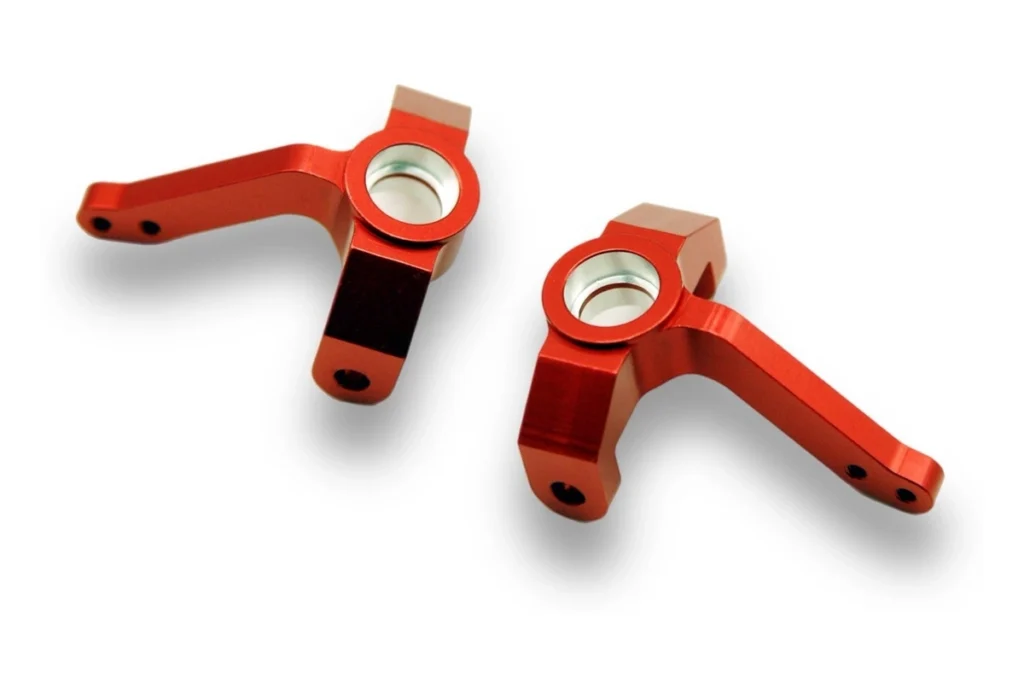
Engine blocks, transmission cases, and suspension knuckles rely on aluminum casting vs CNC machining choices. Foundries die-cast main engine blocks for volume efficiency, while performance racing shops CNC machine custom billet blocks for ultimate strength.
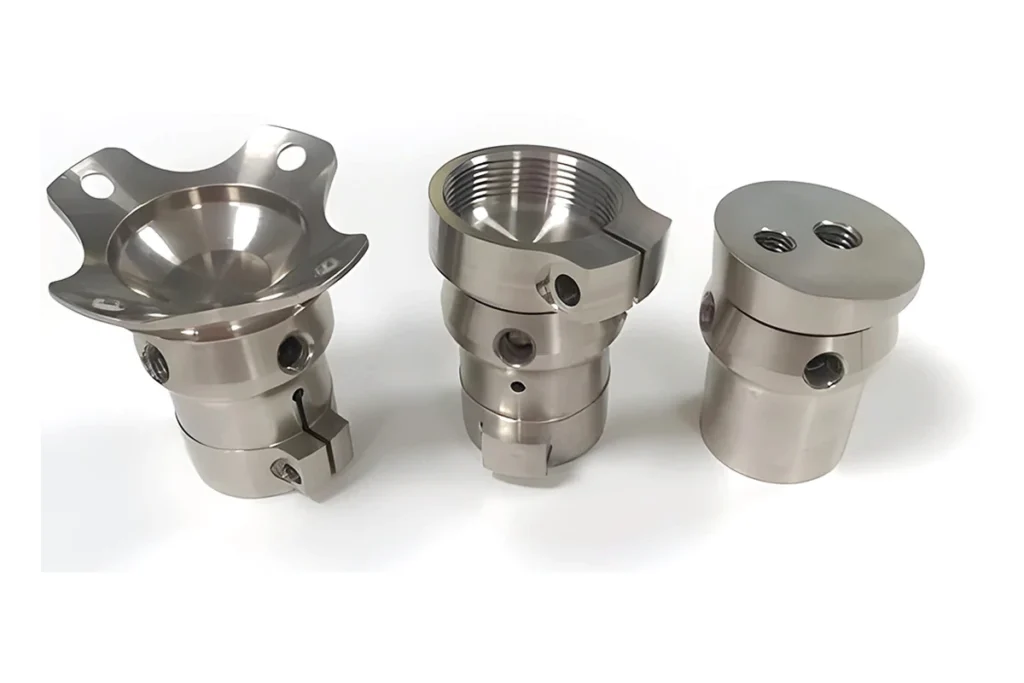
Aerospace and Industrial Components
Aerospace teams balance cast parts vs machined parts carefully. Machined titanium airframe fittings ensure structural density without void defects. Investment cast turbine vanes feature complex internal cooling channels that cutters cannot produce.
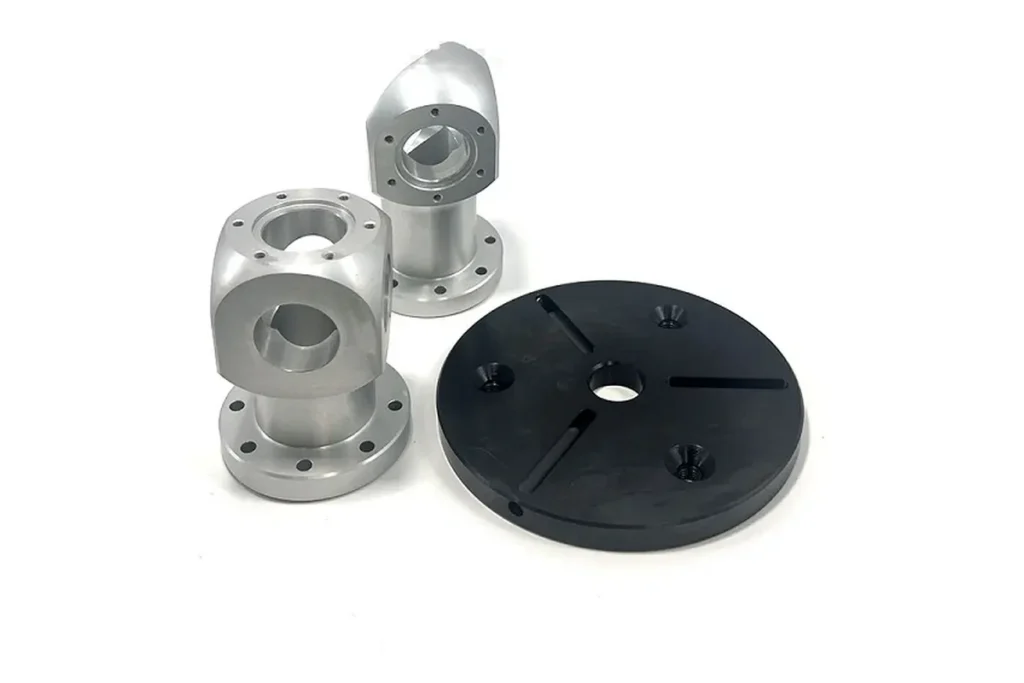
Robotics and Machinery Parts
Robot arms require low mass and high stiffness. Machining 7075-T6 aluminum achieves thin, high-strength structural profiles. Cast iron bases provide vibration damping for heavy industrial lathes and milling beds.
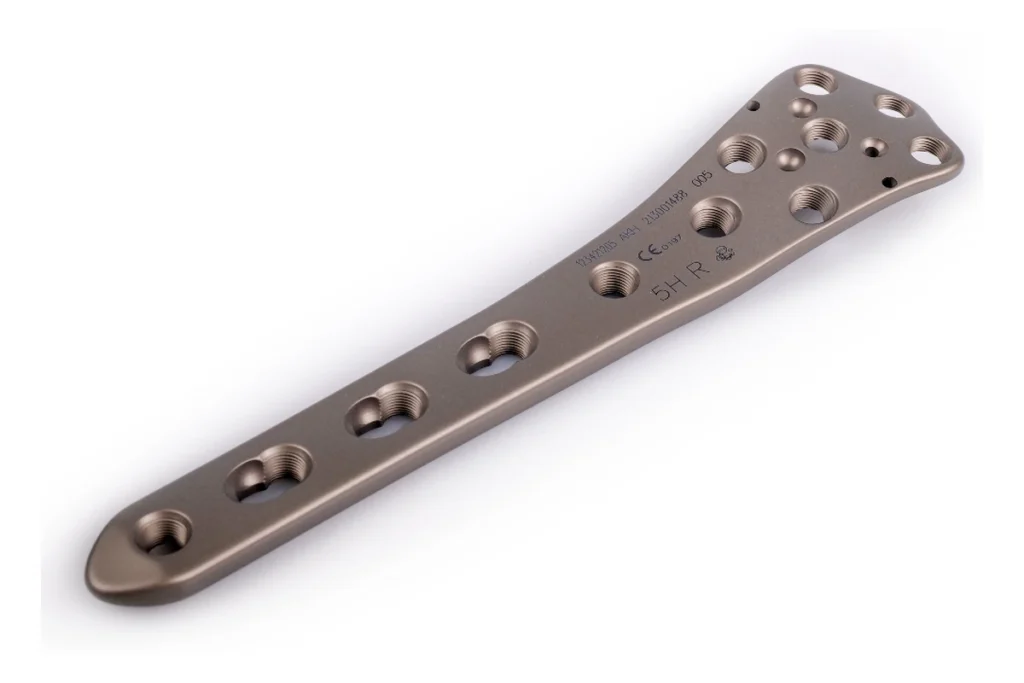
Medical and Electronic Components
Surgical tools and implantable devices require bio-compatible materials and smooth surfaces. Precision casting vs CNC machining analysis shows CNC mills producing bone plates with pristine surface finishes, while investment casting produces complex hand-tool handles efficiently.
How to Choose Between Casting and CNC Machining
Selecting between casting or CNC machining requires evaluating four technical variables.
Choose CNC Machining When You Need Tight Tolerances
- Dimensions require tolerances tighter than +/-0.05 mm.
- The production run is under 500 units.
- The design requires flat sealing faces, tight bearing bores, or precision threads.
- The component undergoes frequent CAD design iterations.
Choose Casting for Complex, High-Volume Parts
- Annual production volumes exceed 2,000 to 5,000 units.
- The component features internal fluid chambers or organic outer curves.
- Reducing raw material waste is a key cost driver.
- The design allows draft angles of 1 to 3 degrees for mold release.
Consider Cost, Quantity, Material and Lead Time
Evaluating when to choose casting over CNC machining comes down to checking whether your volume amortizes initial mold costs. Conversely, knowing when to choose CNC machining over casting depends on whether quick market entry outweighs long-term unit savings.
Casting vs CNC Machining: Cost and Lead Time Factors
Understanding financial trade-offs helps prevent budget overruns during scaling.
Casting Tooling and Mold Costs
Casting tooling requirements include hardened steel dies, core boxes, and ejector mechanisms. Investment casting tooling cost vs CNC machining ranges from $3,000 to $15,000, while high-pressure aluminum die-cast tooling can exceed $50,000.
CNC Machining Setup and Production Costs
CNC machining setup fees cover fixture fabrication, soft jaws, and CAM toolpath verification, usually costing $200 to $1,000. However, CNC machining cost vs casting cost per unit remains higher because machine run time and tool wear accumulate on every part.
What Determines the Final Part Price?
- Raw Billet Cost: Machining high-temp alloys generates high scrap volumes, increasing material waste costs.
- Cycle Time: Cutting a complex housing on a 5-axis mill can take 45 minutes, while die casting freezes the same shape in 30 seconds.
- Secondary Operations: Surface grinding, heat treatment, deburring, and machining cast parts add post-processing costs to both workflows.
Related: Laser Cutting Services: Process, Materials, Tolerances, Design Guide, Applications & Cost (2026)
Can Cast Parts Be CNC Machined?
Combining both processes often yields the optimal balance of speed, cost, and precision.
Cast Near-Net-Shape Parts
Foundries pour metal into a cast near-net-shape that matches 90% of the final geometry, leaving extra material stock (1.5 mm to 3.0 mm) only on surfaces that require tight tolerances.
CNC Machining Critical Features
A machinist clamps the rough casting in a custom fixture and uses CNC equipment to clean up critical features:
- Precision bearing bores and seal grooves.
- Flat mating flanges for liquid-tight gaskets.
- Tapped threads and reamed locator holes.
Benefits of Combining Casting and CNC Machining
Using casting and CNC machining together lowers material waste compared to cutting solid billet, while delivering the tight tolerances that raw casting cannot achieve. This hybrid approach keeps unit costs low for high-volume automotive and industrial components.
Casting vs CNC Machining at Lava3DP
Lava3DP provides custom metal manufacturing, helping engineering teams select the optimal fabrication strategy for their production requirements.
CNC Machining for Custom Metal Parts
Lava3DP operates high-speed 3-axis, 4-axis, and 5-axis CNC machining centers. We produce precision metal components with tolerances down to +/-0.01 mm, delivering prototypes and production batches in as few as 3 business days.
Casting and Complementary Manufacturing Solutions
For scaling projects, Lava3DP offers investment casting, die casting, and sand casting options. Our engineers inspect mold flows, design runner systems, and handle post-casting CNC finishing to deliver ready-to-assembly parts.
Rapid Prototyping with 3D Printing
Lava3DP combines metal 3D printing (DMLS) with CNC finishing to accelerate development. Engineers can test complex prototype geometries in days before committing to hard casting tooling.
Choosing the Right Process for Your Part
Recommended ProcessUpload your CAD files to Lava3DP to receive an automated Design for Manufacturability (DFM) analysis and transparent pricing. Our engineering team reviews your tolerances, volume goals, and material specs to recommend the most cost-effective process.
Ready to Manufacturing with LAVA3dp?
Upload your CAD file today and receive instant pricing, expert engineering support, fast production, and worldwide delivery.
Get an Instant Quote →Frequently Asked Questions
? Is casting cheaper than CNC machining?
Casting is cheaper than CNC machining for high-volume production runs because unit cycle times are short and material waste is minimal. However, for short runs and prototypes, CNC machining is cheaper because it eliminates expensive upfront mold tooling costs.
? Which is more accurate, casting or CNC machining?
CNC machining is significantly more accurate than casting. Machining achieves tight tolerances down to +/-0.005 mm and smooth surface finishes around Ra 0.8 um, whereas standard casting tolerances range from +/-0.2 mm to +/-0.5 mm.
? Is CNC machining better for prototypes?
CNC machining is better for prototypes because it turns solid metal stock into finished components in days without custom tooling. It lets engineers test physical parts quickly and adjust CAD designs without scrapping expensive molds.
? When should you choose casting over CNC machining?
Choose casting when your production volume exceeds several thousand units, your design features complex internal cavities, or you need to minimize raw material waste on large components.
? Can a cast part be CNC machined?
Yes, combining both processes is standard manufacturing practice. Foundries cast parts to a near-net shape, and CNC mills machine critical features like threads, bearing seats, and flat mating surfaces.
? Which is better for high-volume production?
Casting, especially high-pressure die casting, is better for high-volume production. It forms complex metal parts in seconds, driving down per-part labor and machine costs compared to long CNC cutting cycles.