

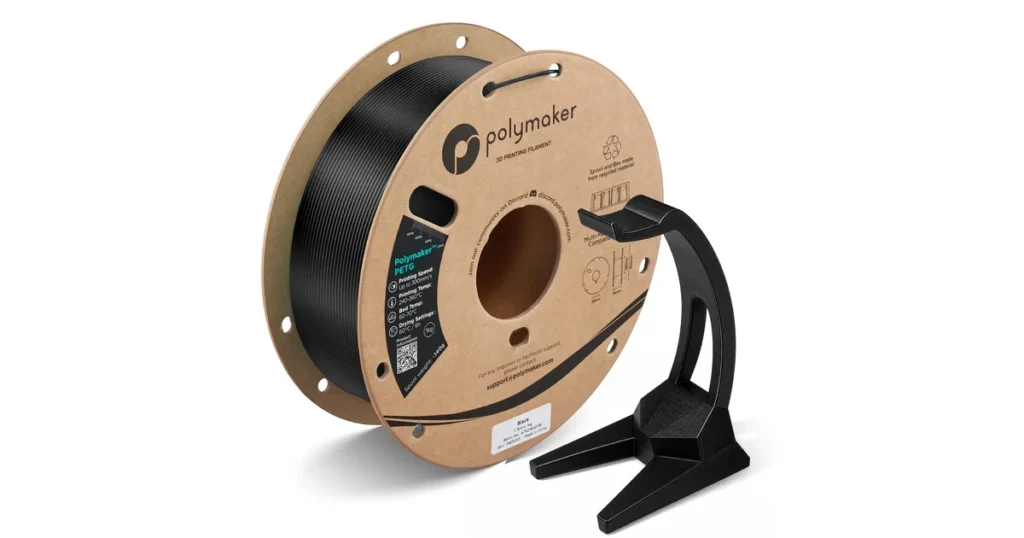
Master printing with PETG filament using our definitive 2026 guide. Learn ideal PETG print settings, fix stringing, and optimize your 3D printer for industrial-grade results. Read now at LAVA3dp!
3D printing enthusiasts often start their journey with standard materials, but structural applications require something tougher. If you need parts that survive sunlight, dropped tools, or chemical spills without the warping headaches of industrial plastics, you need to master PETG filament.
This guide breaks down how to configure your hardware, troubleshoot surface flaws, and select the right blend for your specific projects.
What Is PETG Filament?
What Does PETG Stand For?
PETG stands for polyethylene terephthalate glycol filament. To understand this PETG plastic material, look at everyday clear plastic water bottles, which are made of standard PET. By adding glycol to the chemical structure at a molecular level, manufacturers prevent the plastic from becoming brittle during crystallization. This modification results in a highly resilient PETG material that remains stable during rapid heating and cooling cycles.

How PETG Is Different From Other 3D Printing Materials
Unlike brittle polymers or highly volatile engineering plastics, PETG 3d printer filament occupies a unique middle ground. It modifies the foundational polymer chain to eliminate the structural weaknesses of standard plastics. The addition of glycol lowers the melting point and increases transparency, transforming a rigid packaging material into a highly extrudable, pliable compound engineered specifically for additive manufacturing.
Why PETG Has Became a Popular Choice for Makers and Professionals
Makers and engineers rely on PETG filament for 3d printing because it bridges the gap between cosmetic prototypes and functional hardware. It delivers high impact resistance, clear aesthetics, and decent thermal stability without requiring specialized, high-temperature machine enclosures.
Related: Is PLA Food Safe? The Complete 2026 Guide
PETG Filament at a Glance
Key Properties of PETG
Understanding the physical constraints of your media prevents catastrophic print failures. The structural capability of this material relies on its fundamental physical constants:
Advantages of PETG Filament
- High Chemical Resistance: Unaffected by diluted acids, alkalis, and alcohols.
- Minimal Shrinkage: Low thermal expansion prevents severe geometric distortion during cooling.
- Superb Layer Adhesion: Interlayer molecular bonds fuse completely, yielding exceptional Z-axis strength.
- UV Stability: Resists solar degradation, retaining its mechanical properties outdoors.
Disadvantages of PETG Filament
- High Hygroscopicity: Absorbs ambient moisture rapidly, leading to steam pockets during extrusion.
- Severe Stringing: Its high melt viscosity causes fine, hair-like plastic webs across open gaps.
- Over-Adhesion to Glass: Fuses to raw glass build surfaces so violently that it can rip chunks out of the bed upon removal.
Who Should Use PETG Filament?
This polymer suits mechanical designers, outdoor hobbyists, and manufacturing engineers who demand functional resilience but lack the specialized, heated-chamber infrastructure required for high-grade engineering plastics.
PETG vs Other Popular 3D Printing Filaments

Material Comparison
Choosing the correct media requires a direct, side-by-side technical evaluation.
PETG vs PLA
When comparing PETG filament vs PLA, the choice comes down to thermal limits versus ease of use. PLA prints effortlessly at lower temperatures but deforms inside a hot car on a summer day. PETG withstands temperatures up to 80℃ before softening, making it the clear choice for functional applications.
PETG vs ABS
The classic battle of PETG filament vs ABS hinges on workspace safety and printer setup. ABS requires a heated enclosure to prevent severe warping and releases toxic styrene fumes during processing. PETG offers comparable impact strength, emits minimal odor, and prints reliably on open-frame machines.
PETG vs ASA
In the PETG vs ASA matchup, ASA wins for extreme, long-term UV resistance and offers an acetone-smoothable finish. However, ASA requires high ambient enclosure temperatures to prevent splitting. PETG remains far more accessible for users with standard hardware configurations.
PETG vs TPU
Evaluating PETG vs TPUcompares a rigid structural plastic to a highly flexible elastomer. TPU stretches and bends under minimal load, whereas PETG provides rigid structural support with just enough elastic deformation to absorb sudden impacts without snapping.
Which Material Should You Choose?
| Material | Printing Difficulty | Max Temperature Resistance | UV Resistance | Best Application |
|---|---|---|---|---|
| PLA | Very Low | 55℃ | Poor | Visual models, rapid prototypes |
| PETG | Moderate | 80℃ | Good | Mechanical brackets, outdoor fixtures |
| ABS | High | 100℃ | Poor | High-heat indoor enclosures |
| ASA | High | 100℃ | Excellent | Automotive exterior parts |
| TPU | Moderate-High | 80℃ | Excellent | Gaskets, dampeners, flexible cases |
Best Uses for PETG Filament
| Category | Specific Uses |
|---|---|
| Functional Parts | Mechanical Brackets, Custom Enclosures, Snap-fit Joints |
| Outdoor Fixtures | Garden Hose Adapters, Drone Frames, Marine Component Housing |
Functional Mechanical Parts
The structural properties of this material make it perfect for load-bearing brackets, custom power-tool housings, and snap-fit mechanisms that require high yield strength without catastrophic failure.
Outdoor and UV-Exposed Prints
Because its molecular backbone resists solar radiation, it serves exceptionally well as the outdoor resistant PETG filament of choice for drone frames, garden hose adapters, and marine equipment components.
Automotive Components
Interior brackets, phone mounts, and dash panel fixtures printed with this media will survive cabin heat spikes that would cause PLA components to warp and sag into useless shapes.
Containers and Protective Covers
Its natural chemical resistance allows you to print custom chemical funnels, battery storage boxes, and protective shields that won’t degrade when exposed to grease, oils, or cleaning agents.
Prototyping and Engineering Applications
Engineers use it to create functional prototypes that undergo stress testing, fitment verification, and low-volume production runs, serving as a reliable stand-in for injection-molded parts.
Related: Best Glue for PLA: Top Adhesives for Strong 3D Printed Parts in 2026
Recommended PETG Print Settings
Achieving pristine surface finishes requires dialing in precise thermal and kinetic values. Use these verified parameters as your operational baseline.
| Parameter | Target Range |
|---|---|
| Nozzle Temperature | 230°C – 250°C |
| Bed Temperature | 70°C – 85°C |
| Print Speed | 40 – 60 mm/s |
| Part Cooling Fan | 20% – 50% (Disabled Layer 1) |
| Retraction Distance (Direct) | 1.0 – 2.5 mm |
| Retraction Distance (Bowden) | 4.0 – 6.0 mm |
Ideal Nozzle Temperature
TThe baseline PETG nozzle temperature ranges from 230°C to 250°C. Printing below 230°C leads to poor fusion, causing layers to split under modest loads.
Recommended Bed Temperature
Set your PETG bed temp between 70°C and 85°C. Setting the PETG bed temperature too low triggers instant corner curling, while exceeding 90°C can cause the bottom layers of your model to sag.
Print Speed Recommendations
Set your PETG print speed settings to a conservative 40 to 60 mm/s. Forcing this high-viscosity plastic through a hotend too quickly causes severe pressure buildup, resulting in missing segments and under-extrusion.
Cooling Fan Settings
Keep your PETG cooling fan settings low, between 20% and 50%. Turn the fan completely off for the first two layers to allow the plastic to fuse thoroughly. Excessive airflow cools the material too quickly, which ruins structural strength.
Retraction Settings for PETG
First Layer Settings for Better Adhesion
Unlike PLA, which prints best when slightly squished into the build plate, PETG needs a small gap to lay down cleanly. Increase your first-layer Z-offset by +0.02 to +0.06 mm to prevent the nozzle from plowing through the extruded plastic.
How to Print PETG Successfully
Build Plate Preparation
Never print directly onto bare glass or PEI without a barrier. Wipe down your platform with isopropyl alcohol (99%), then apply a thin, uniform layer of glue stick or specialized release agent to protect your build surface.
Adhesion Tips for Smooth First Layers
Set your first-layer height to 100% or 125% of your standard layer thickness, and drop your initial print speed down to a slow 15 to 20 mm/s. This gives the thick plastic enough time to settle and adhere securely.
Preventing Excessive Stringing
To apply a reliable PETG filament stringing fix, enable “Combing” or “Avoid Crossing Peripheries” in your slicer settings. This keeps the print head inside the model’s walls during travel moves, trapping any oozing plastic within the internal infill structure.
Reducing Blobs and Surface Imperfections
To implement a PETG blobs and zits fix, configure your slicer’s coasting settings to 0.2 mm³. This stops the extruder right before a path ends, using residual nozzle pressure to finish the line cleanly instead of leaving a blob.
Improving Layer Adhesion and Strength
If you run into PETG layer adhesion problems, bump up your extrusion temperature by 5°C and drop your part cooling fan speed by half. The hotter plastic will weld more effectively to the layer beneath it.
Common PETG Printing Problems and Their Solutions
PETG Stringing
- Root Cause: Excessively high extrusion temperatures or wet filament.
- Solution: Drop your nozzle temperature by 5°C increments and dry the spool.
PETG Not Sticking to the Bed
- Root Cause: The nozzle is too far from the bed, or the surface is contaminated with hand oils.
- Solution: Clean the build plate thoroughly and adjust your Z-offset to fix PETG filament not sticking to bed issues.
PETG Warping
- Root Cause: Cold room drafts causing uneven shrinkage across the print geometry.
- Solution: Block ambient drafts and print with a 5 mm brim to resolve PETG filament warping issues.
PETG Oozing and Blobs
- Root Cause: Over-extrusion or incorrect retraction values.
- Solution: Calibrate your extruder steps and adjust your PETG over extrusion settings by dropping your flow multiplier to 0.95.
PETG Poor Surface Finish
- Root Cause: Too much cooling fan airflow freezes the plastic before it can lay down smoothly.
- Solution: Keep your fan speed capped at a maximum of 30% during infill and perimeter passes.
PETG Layer Separation
- Root Cause: Severe under-extrusion or printing too quickly at low temperatures.
- Solution: Lower your print speed and verify your PETG first layer problems are resolved by checking your initial bed alignment.
Does PETG Filament Need Drying?
How Moisture Affects PETG Prints
The chemical structures within this material attract ambient humidity. When wet plastic hits your hotend, the trapped water instantly boils into steam, blowing tiny holes in your extrusions and ruining the structural strength of your part.
Signs Your PETG Filament Is Wet
- Audible popping, crackling, or hissing sounds coming out of the nozzle.
- A rough, foamy surface finish on printed parts.
- Excessive, uncontrollable stringing that persists even after tuning your retraction settings.
Recommended PETG Drying Temperature and Duration
Place your wet spools into a dedicated filament dryer or a convection oven set to 65°C for 6 to 8 hours. Never exceed 70°C, or you risk softening the plastic and fusing the entire spool into a solid, useless block.
Best Practices for PETG Storage
Store your dried spools inside airtight vacuum bags or sealed heavy-duty plastic bins. Be sure to throw in a handful of fresh silica gel packets to absorb any residual moisture.
How Strong Is PETG Filament?
Impact Resistance
Its molecular structure yields fantastic impact strength, allowing functional parts to bend slightly and absorb sharp shocks rather than fracturing like more brittle materials.
Heat Resistance
With a structural deflection point of 80°C, it handles elevated temperatures far better than standard PLA, making it a great fit for electronic enclosures and engine bay brackets.
Chemical Resistance
It handles exposure to household chemicals, oils, and automotive fluids without melting or showing signs of stress cracking.
Weather and UV Resistance
It won’t turn brittle or lose its color when left out in the sun, making it the perfect outdoor resistant PETG filament for long-term outdoor installations.
Related: 10 Best Resin 3D Printers in 2026: Tested Picks for Every Budget
Is PETG Filament Food Safe?
Food Safety Considerations
While raw PETG resin is inherently food-safe, 3D printing introduces subtle risks. Tiny gaps between layers can trap organic particles, creating breeding grounds for bacteria that are difficult to clean away.
When PETG Can Be Used for Food Contact Applications
You can use a food safe PETG filament for single-use items, cookie cutters, or dry-goods funnels, provided you seal the finished part with a food-safe, two-part epoxy resin.
Important Limitations Users Should Know
Brass nozzles can leach trace amounts of lead into your prints. If you plan to make items that touch food, swap out your standard nozzle for a food-safe stainless steel one, and avoid using your prints with hot liquids.
How To Choose the Best PETG Filament
Diameter Tolerance
Look for brands that guarantee a diameter tolerance of ±0.02 mm or better. Consistent diameter ensures uniform extrusion and prevents unexpected under- or over-extrusion issues.
Moisture Packaging and Storage Quality
High-quality brands ship their spools in thick, vacuum-sealed aluminum or plastic bags packed with a generous amount of desiccant. Avoid manufacturers that ship spools in flimsy, unsealed packaging.
Color Consistency
Premium options maintain strict color consistency across different production lots, ensuring that multi-part assemblies printed weeks apart match perfectly.
Brand Reputation and Quality Control
Stick to manufacturers that offer transparent material datasheets and maintain strict quality control standards across their production lines.
Best PETG Filament Brands in 2026
Choosing the right brand depends on your project goals, budget, and specific performance requirements.
Best Overall
Best Budget
Best Engineering Grade
Special Varieties
Best Overall PETG Filament
The PETG filament Bambu line sets the modern standard for general printing. It features optimized flow properties designed for high-speed print architectures, making it arguably the best PETG filament for day-to-day projects on modern machines.
Best Budget PETG Filament
If you need to stock up on a budget, buying bulk PETG filament on PETG filament amazon storefronts from trusted brands like PETG filament ELEGOO delivers great print quality at an accessible price point.
Best PETG for Functional Parts
For heavy-duty assemblies, choose a premium, engineering-grade line like MatterHackers Pro. It features tight manufacturing tolerances that deliver predictable structural strength, making it the best PETG filament for functional parts. If you are just starting out, standard options from hatchbox offer a reliable, forgiving experience as the best PETG filament for beginners.
Best Transparent PETG Filament
If you want to print water-clear lenses or light pipes, high-quality transparent petg filament from brands like Polymaker delivers excellent clarity when printed slowly at higher temperatures with the cooling fan turned off.
Best Carbon Fiber PETG Filament
For parts that need extra rigidity and a premium matte finish, carbon fiber PETG filament blends micro-carbon strands into the polymer matrix. This significantly boosts stiffness and eliminates the typical glossy look of standard prints.
Final Verdict
Mastering PETG comes down to managing moisture, dialing in your retraction settings, and ensuring proper first-layer bed clearance. Once you dial in these parameters, it becomes an incredibly reliable tool for producing durable, UV-resistant, and chemically resilient parts that easily outperform standard filaments.