

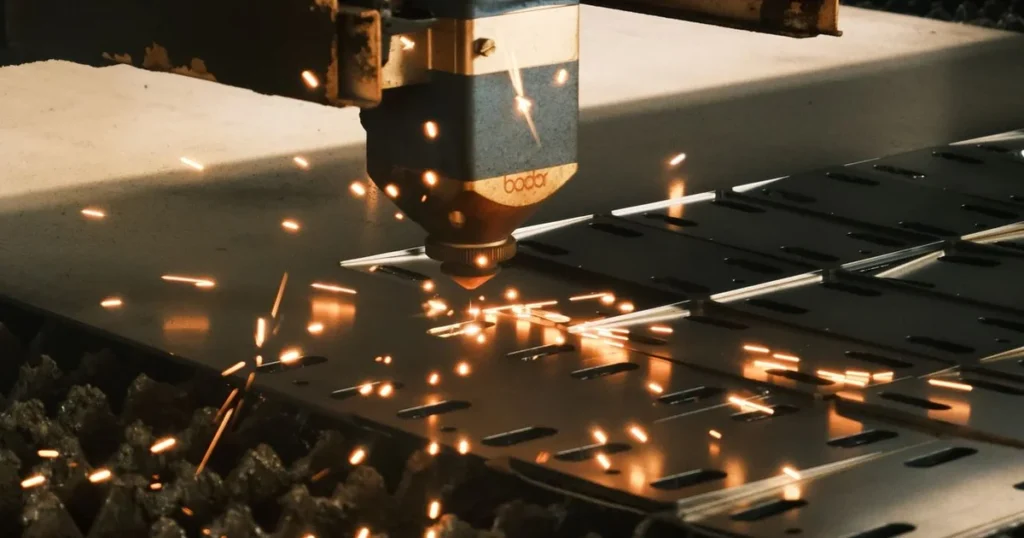
Discover custom laser cutting services at Lava3DP. Get instant online quotes, tight tolerances, and rapid prototyping across metals and plastics today!
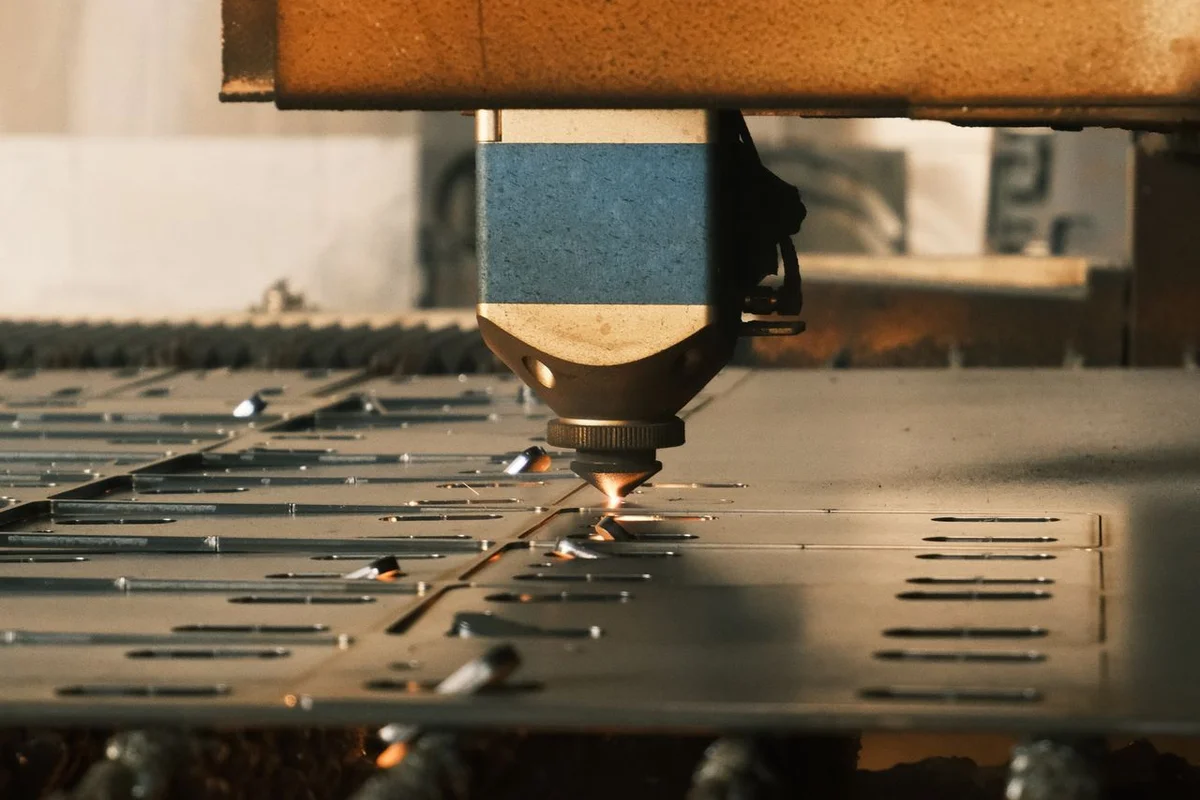
Why Laser Cutting Remains One of the Most Precise Manufacturing Processes
High-energy photons focused into a single point can slice through solid steel with microscopic precision. Modern industrial laser cutting delivers thermal energy to a localized area, vaporizing or melting material instantly while compressed assist gas clears the melt pool.
This non-contact thermal process eliminates mechanical tool wear, prevents part distortion, and delivers repeatability tolerances down to ±0.002 inches (±0.05 mm). For modern engineering teams, laser cutting provides an good ratio of speed, geometric flexibility, and dimensional accuracy across thin and medium-gauge materials.
Who Should Use Laser Cutting Services?
Engineers, product designers, procurement specialists, and hardware startups rely on laser cutting services to transform 2D CAD files into physical components without spending thousands on custom stamping dies or hard tooling.
Whether you need rapid prototypes within 24 hours, low-volume enclosures, or full-scale production runs of thousands of bracket components, custom laser cut parts fit every stage of product development.
What Is Laser Cutting?
How the Laser Cutting Process Works
The laser cutting process directs high-power laser optics through a nozzle onto the workpiece. A combination of mirrors, fiber cables, and focusing lenses compresses light energy into an extremely dense spot—often less than 0.004 inches (0.1 mm) in diameter.
Once the beam penetrates the material, a continuous stream of coaxial assist gas (such as nitrogen cutting or oxygen cutting gas) blows the molten metal out of the cut zone, creating a clean slit known as the kerf width.
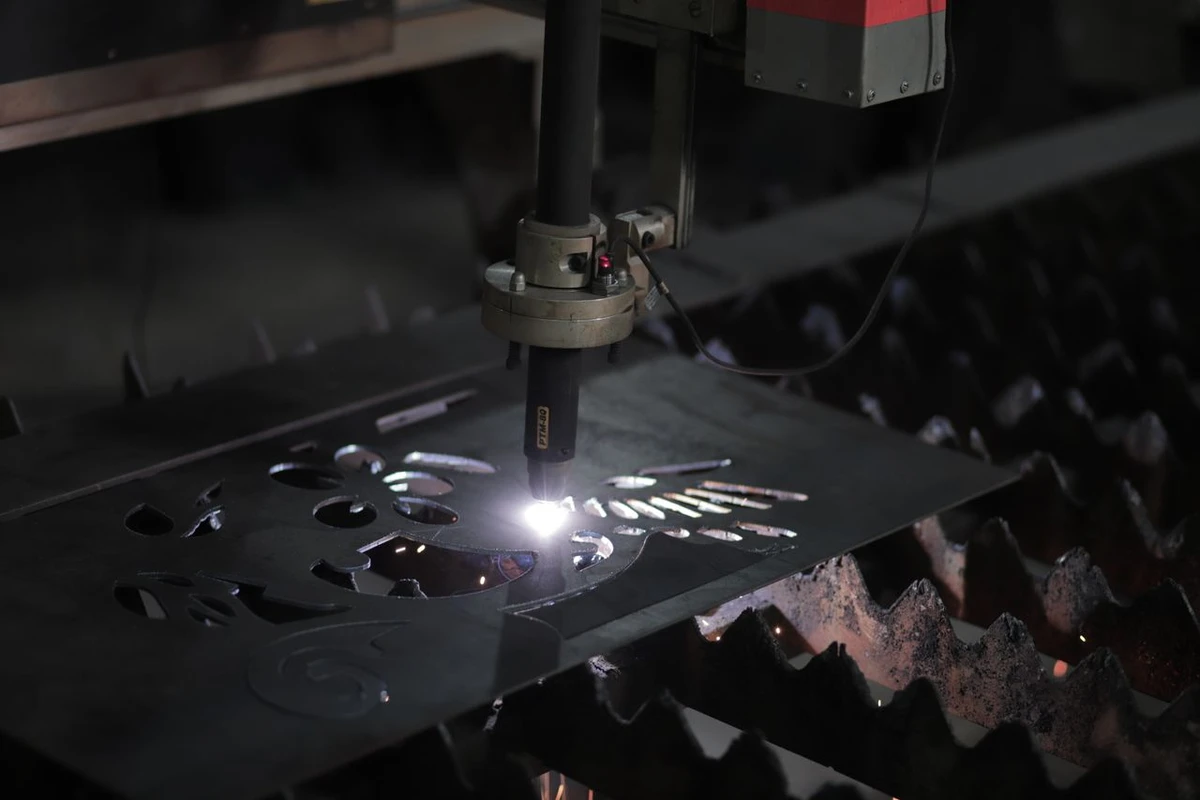
The Science Behind Focused Laser Beams
Laser light differs from ambient radiation through three core physics principles: monochromacity, coherence, and directional alignment. When energized atoms inside a laser resonator emit photons of identical wavelengths, those photons bounce between reflective optics to amplify energy.
Focusing this coherent beam through a specialized lens concentrates kilowatts of power into a focal point barely wider than a human hair, generating energy density exceeding millions of Watts per square centimeter.
Key Components of a Laser Cutting Machine
A commercial laser cut machine metal system consists of five primary assemblies:
- Laser Source: Generates the coherent light beam.
- Beam Delivery System: Guides light through fiber optic cables or articulate mirrors.
- Cutting Head & Capacitive Height Sensor: Holds the focusing lens and auto-adjusts distance above uneven sheet stock.
- CNC Controller: Converts DXF or STEP geometry into multi-axis motion paths.
- Shuttle Table & Assist Gas System: Manages automated sheet loading while regulating high-pressure gas streams.
Related: Die Cutting Service | Custom & Precision Die Cutting
Types of Industrial Lasers (Fiber, CO₂ & Nd:YAG)
| Laser Type | Wavelength | Best For | Typical Efficiency | Maintenance Requirements |
|---|---|---|---|---|
| Fiber Laser | 1.064 µm | Non-ferrous metals (aluminum laser cutting, brass laser cutting, copper laser cutting), stainless steel laser cutting, carbon steel laser cutting | 30% – 40% | Extremely Low (Solid-State) |
| CO₂ Laser | 10.6 µm | Organic materials (wood, MDF, plywood), acrylic laser cutting, non-metal sheet stock | 10% – 15% | High (Mirror Alignment, Gas Refills) |
| Nd:YAG Laser | 1.064 µm | Specialized micro-machining, titanium laser cutting, thin reflective foils | 3% – 5% | Medium to High (Flashlamp Replacement) |
Types of Laser Cutting Processes
Fusion Cutting
Fusion cutting—often called inert gas cutting—uses high-pressure nitrogen or argon to blow molten material away from the cut kerf. Because the assist gas is chemically inert, it prevents oxidation along the edge. Fusion cutting is essential for stainless steel, aluminum, and titanium laser cutting where clean, weld-ready surface quality is mandatory.
Flame (Reactive) Laser Cutting
Flame cutting relies on high-pressure oxygen cutting gas. The oxygen reacts exothermically with carbon steel, adding chemical heat energy to the process. This thermal boost dramatically accelerates cut speeds through thick plate sections, though it creates a dark iron-oxide coating along the cut edge that requires light surface preparation prior to welding or painting.
Sublimation (Vaporization) Cutting
Sublimation cutting uses maximum laser power to instantly vaporize materials without transitioning them into a liquid phase. This technique dominates non-metal processing like acrylic laser cutting or thin plastic film slitting, producing polished edges without liquid residue buildup.
Remote Laser Cutting
Remote laser cutting eliminates assist gas entirely. Instead, ultra-high-speed galvanometer mirrors scan high-intensity single-mode fiber lasers across ultra-thin foils or paper stock, removing material purely through rapid, multi-pass sublimation.
Laser Engraving vs Laser Cutting vs Laser Marking
- Laser Cutting: Penetrates completely through the sheet thickness to sever discrete profiles.
- Laser Engraving: Removes targeted surface depth to leave permanent 3D text, logos, or serial numbers.
- Laser Marking: Uses low thermal energy to induce localized oxidation or surface color changes without altering base dimensions.
Related: Custom SLA 3D Printing Service | High Accuracy Prototypes
Materials Available for Laser Cutting at Lava3DP
Stainless Steel Laser Cutting
Lava3DP processes stainless steel alloys including 304, 316L, and 17-4 PH. High-pressure nitrogen assist gas delivers burr-free edges, making these components ideal for food processing, sanitary medical devices, and marine equipment.
Carbon & Mild Steel Laser Cutting
From structural A36 to high-strength 1018 steel, carbon steel laser cutting balances structural strength with high production efficiency. Oxygen assist gas allows rapid section processing across plate thicknesses up to 1 inch (25 mm).
Aluminum Laser Cutting
Laser processing aluminum alloys (such as 6061-T6, 5052-H32, and 7075) requires high optical laser power density due to the metal’s high thermal conductivity and reflectivity. Modern fiber systems yield high edge precision without thermal warping.
Brass Laser Cutting
Brass alloys (C260, C360) reflect infrared wavelengths. Lava3DP utilizes advanced fiber optics featuring anti-reflection beam protection to cut high-definition brass shims, conductive contacts, and decorative architectural trim cleanly.
Copper Laser Cutting
Pure copper (C110) presents extreme thermal conductivity. Optimized beam shaping allows clean processing of busbars, heat sinks, and electrical grounding plates without heat distortion.
Titanium Laser Cutting
Grade 2 and Grade 5 titanium laser cutting relies on ultra-pure argon shielding gas to prevent hydrogen embrittlement and surface discoloration, maintaining strict structural integrity for aerospace components.
Galvanized Steel Laser Cutting
Galvanized sheet metals combine protective zinc coatings with underlying carbon steel strength. Lava3DP tunes laser parameters to seal raw edges during processing, preserving corrosion protection along the cut contour.
Acrylic (PMMA) Laser Cutting
Laser processed acrylic exhibits flame-polished edges straight off the machine bed. Lava3DP handles cast and extruded acrylic up to 1 inch thick for light pipes, enclosures, and optical displays.
Polycarbonate & Engineering Plastics
While standard polycarbonate laser cutting produces severe edge discoloration due to thermal degradation, Lava3DP utilizes specialized short-pulse laser parameters to process thin sheets without charring. We also process engineering polymers like Delrin (Acetal), PETG, and ABS.
Wood, MDF & Plywood Laser Cutting
Organic sheet goods like MDF, Baltic birch plywood, and natural hardwood offer exceptional structural stability for prototype mockups, architectural scale models, and interior paneling.
Which Materials Are Not Suitable for Laser Cutting?
Never laser cut PVC (Polyvinyl Chloride), Vinyl, or PTFE (Teflon). Thermal decomposition releases toxic chlorine gas and hydrofluoric fumes that damage human lungs and corrode CNC machinery internals. Highly flammable materials like cellulose nitrate are also prohibited.
Laser Cutting Design Guidelines
Recommended Material Thickness
- Sheet Metals: 0.005 in (0.12 mm) to 1.000 in (25.4 mm)
- Plastics & Acrylics: 0.030 in (0.8 mm) to 1.000 in (25.4 mm)
- Wood & Composites: 0.060 in (1.5 mm) to 0.750 in (19.0 mm)
Minimum Hole Diameter
To prevent thermal washouts and hole tapering, maintain a 1:1 ratio between minimum hole diameter and material thickness. For a 0.125-inch (3.17 mm) aluminum plate, design holes with a minimum diameter of 0.125 inches.
Kerf Width and Compensation
The laser beam burns away a narrow slot of material called the kerf width. Depending on nozzle diameter and focal setup, laser kerf typically spans between 0.004 in and 0.012 in (0.10 mm to 0.30 mm). CAM software automatically applies offset compensation to ensure final physical parts align with CAD dimensions.
Corner Radius Recommendations
Sharp internal 90-degree corners create localized stress risers and concentrate laser dwell time. Adding an internal fillet radius equal to or greater than the material thickness improves structural integrity and eliminates sharp corners.
Part Spacing and Nesting
When arranging multiple laser cut parts across a single sheet, preserve a minimum distance equal to one material thickness (minimum 0.125 inches / 3.0 mm) between adjacent cut contours. Smart software nesting maximizes sheet utilization, reducing material waste and per-part production cost.
Bend Relief and Tabs
When preparing sheet metal parts for downstream press brake bending, place rectangular bend relief cutouts at feature intersections. This prevents material tearing and distortion near bend lines.
Text, Logos and Engraving Considerations
Convert all CAD text fonts into vector outlines. Ensure internal loops in letters like “A“, “B“, and “O” are bridged with stencil tabs if you plan to cut them out entirely; otherwise, internal dropouts will fall away.
CAD File Requirements (DXF, DWG, STEP, AI, SVG & PDF)
- 2D Vector Graphics: DXF files, DWG files, SVG files, vector PDFs.
- 3D Solid Models: STEP (.stp), IGES (.igs).
- Requirement: Maintain 1:1 scale ratios and ensure all vector loops are fully closed without overlapping line segments.
Common Design Mistakes to Avoid
- Double-stacked vector lines in DXF exports that cause double laser passes.
- Unclosed vector contours that stop CNC motion paths.
- Placing features or holes closer than one material thickness to sheet edges.
Related: Custom SLS 3D Printing Service | Industrial Nylon Parts Online
Laser Cutting Tolerances and Surface Quality
Standard Manufacturing Tolerances
| Material Gauge Range | Standard Tolerance | Precision Tolerance |
|---|---|---|
| Up to 0.125 in (3.0 mm) | ±0.005 in (±0.13 mm) | ±0.002 in (±0.05 mm) |
| 0.126 in – 0.250 in (3.1 – 6.3 mm) | ±0.008 in (±0.20 mm) | ±0.004 in (±0.10 mm) |
| 0.251 in – 0.500 in (6.4 – 12.7 mm) | ±0.015 in (±0.38 mm) | ±0.008 in (±0.20 mm) |
| Above 0.500 in (12.7 mm) | ±0.030 in (±0.76 mm) | ±0.015 in (±0.38 mm) |
Edge Quality and Burr Formation
High-pressure gas assist removes molten metal, yielding sharp top and bottom edges. Mild dross or burr formation occasionally occurs on thick bottom profiles, which automated vibratory deburring or brushing systems clear easily.
Heat Affected Zone (HAZ)
The Heat Affected Zone (HAZ) represents the microstructural region near the cut edge altered by intense processing temperatures. Fiber lasers concentrate energy so quickly that the HAZ remains localized, preventing physical distortion or metallurgical changes in sensitive structural alloys.
Dimensional Accuracy & Repeatability
CNC optic drives paired with linear optical encoders maintain positioning accuracy down to ±0.001 inches (0.025 mm), guaranteeing that part 1 and part 10,000 match identical geometric specifications.
Factors That Influence Precision
- Material thermal conductivity
- Focus lens position and beam stability
- Assist gas pressure consistency
- Raw material sheet flatness
Available Finishing Options After Laser Cutting
Transform raw cut parts into ready-to-use production hardware with post-processing options:
- Deburring: Mechanical grinding or vibratory tumbling to smooth sharp edges.
- Bead Blasting: Uniform matte surface finish that hides directional tool marks.
- Powder Coating: Durable, corrosion-resistant polymer coatings available in RAL color spectrums.
- Anodizing (Aluminum): Type II decorative or Type III hard-coat anodizing for abrasion resistance.
- Passivation: Chemical treatment removing free iron from stainless steel surfaces to maximize corrosion defense.
- Black Oxide: Microscopic conversion coating for carbon steel components requiring zero dimensional change.
- PVD Coating & Silk Screening: High-end decorative metal films or screen-printed labels for front panels.
Advantages of Laser Cutting
Exceptional Speed
Process complex geometries in seconds without physical tool changes.
Material Efficiency
Ultra-narrow kerf widths allow tight nesting arrangements that slash raw material waste.
No Mechanical Tool Wear
Non-contact thermal cutting maintains exact edge dimensions from start to finish.
Scalable Production
Go seamlessly from single-unit laser cutting for prototypes to high-volume production runs.
Limitations of Laser Cutting
- Upper Thickness Constraints: Plates exceeding 1.25 inches (30 mm) thick often require alternative cutting methods like waterjet or plasma processing.
- Reflective Metal Challenges: Highly reflective materials require continuous monitoring to prevent back-reflection damage inside optical heads.
- Tapered Edge Profile: Thick plate sections show a minor angular taper along the cut edge due to beam convergence and divergence.
Laser Cutting vs Other Manufacturing Processes
Process Comparison Table
| Attribute | Laser Cutting | Waterjet Cutting | Plasma Cutting | CNC Machining | Wire EDM |
|---|---|---|---|---|---|
| Max Thickness | ~1.0 in (25 mm) | 6.0+ in (150+ mm) | 3.0+ in (75+ mm) | Unlimited (Block size) | 12.0+ in (300+ mm) |
| Tolerance | ±0.003 in | ±0.008 in | ±0.030 in | ±0.0005 in | ±0.0001 in |
| Cutting Speed | Extremely Fast | Moderate | Fast | Slow | Very Slow |
| Heat Affected Zone | Small | None | Large | Minimal | Extremely Small |
| Setup Cost | Low | Low | Low | Medium to High | High |
Industries That Use Laser Cutting
- Aerospace: Airframe bracketry, engine shims, and high-temp alloy duct components.
- Automotive: Chassis gussets, customized flange plates, and EV battery enclosure covers.
- Medical Devices: Surgical instrument components, stainless enclosures, and micro-fluidic manifolds.
- Robotics & Automation: Custom end-effectors, structural chassis plates, and arm linkages.
- Energy & Architecture: Solar mounting hardware, decorative facade screens, and heavy transformer brackets.
Related: FDM 3D Printing Service | Fast, High-Quality & Affordable
Common Applications of Laser Cutting
Custom Fabricated Components
- Sheet Metal Enclosures: Precision cut flat patterns ready for press-brake forming and hardware insertion.
- Brackets & Mounting Plates: Structural supports for industrial machinery and automotive frames.
- Electrical Panels: Cleanly cut control panels featuring intricate cutout patterns for switches and displays.
- Functional Prototypes: Fast physical iterations designed to test fitment before launching mass production tooling.
Laser Cutting Cost Guide (2026)
What Affects Laser Cutting Cost?
Machine Time: Hourly rate based on laser wattage, assist gas consumption, and traverse speed.
Material Selection: Commodity carbon steel costs significantly less per square foot than high-grade aerospace titanium or specialty engineering plastics.
Geometry Complexity: High piercing counts and tight serpentine paths extend run times compared to simple rectangular perimeter cuts.
Total Part Cost
Total Part Cost = Raw Material Cost + (Machine Time × Hourly Rate) + Setup Fee + Post-Finishing Costs
How to Reduce Laser Cutting Costs
Standardize on off-the-shelf sheet metal gauges.
How to Reduce Laser Cutting Costs
Combine multiple discrete components into single sheet nesting orders.
How to Reduce Laser Cutting Costs
Avoid excessively small holes that require high pierce delays.
How to Order Custom Laser Cut Parts from Lava3DP
Step-by-Step Purchasing Workflow
- Upload Your CAD Files: Drag and drop 2D (DXF, SVG) or 3D (STEP) files directly onto Lava3DP’s instant quoting platform.
- Select Materials & Finishes: Choose your desired material grade, thickness, and post-processing treatments.
- Automated DFM Feedback: Receive instant feedback on potential geometric pinch points or minimum hole size violations.
- Precision Production: Automated laser systems process your parts with real-time quality control checks.
- Global Shipping: Packaged parts deliver straight to your door with trace tracking and material inspection reports.
Why Choose Lava3DP for Laser Cutting Services
Lava3DP combines industrial multi-kilowatt fiber systems with digital quote automation. Our production network offers:
Instant Online Pricing
Strict Tolerance Guarantees
Advanced optical calibration keeps tolerances tight across single prototypes and high-volume runs.
Comprehensive Engineering Support
On-demand DFM reviews ensure clean, reliable production every time.
Global Logistics
Fast delivery options to keep your product development timeline on schedule.
Related Manufacturing Services at Lava3DP
Conclusion
Laser processing continues to set the benchmark for speed, precision, and flexibility across modern manufacturing. By optimizing your vector designs for production, selecting the right assist gas parameters, and leveraging digital manufacturing platforms like Lava3DP, you can turn CAD files into production-ready metal hardware in record time.
Ready to Manufacturing with LAVA3dp?
Upload your CAD file today and receive instant pricing, expert engineering support, fast production, and worldwide delivery.
Get an Instant Quote →