

Discover how insert molding integrates metal, plastic, or ceramic components directly into molded assemblies. Learn key design guidelines, materials, tolerances, and costs to optimize production with Lava3DP. Contact our engineering experts today for an instant online quote!
What Is Insert Molding?
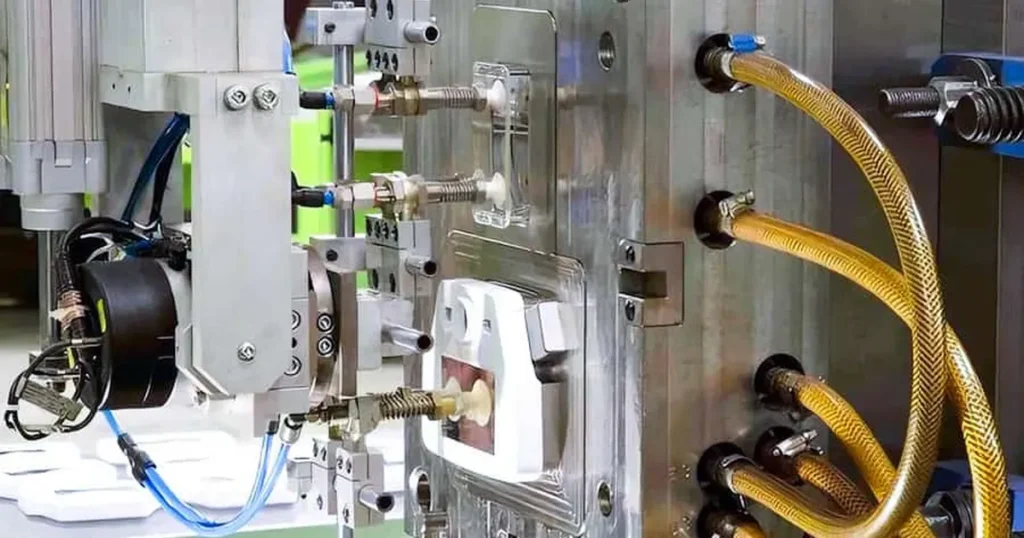
Insert molding encapsulates pre-formed components—usually metal inserts, electronic pins, or custom threaded inserts—within a molten thermoplastic or thermoset resin matrix. Placing the insert directly into the mold cavity before injecting plastic yields a single, highly integrated part. This process eliminates separate mechanical fasteners, lowers unit assembly time, and significantly improves structural strength.
How Insert Molding Works
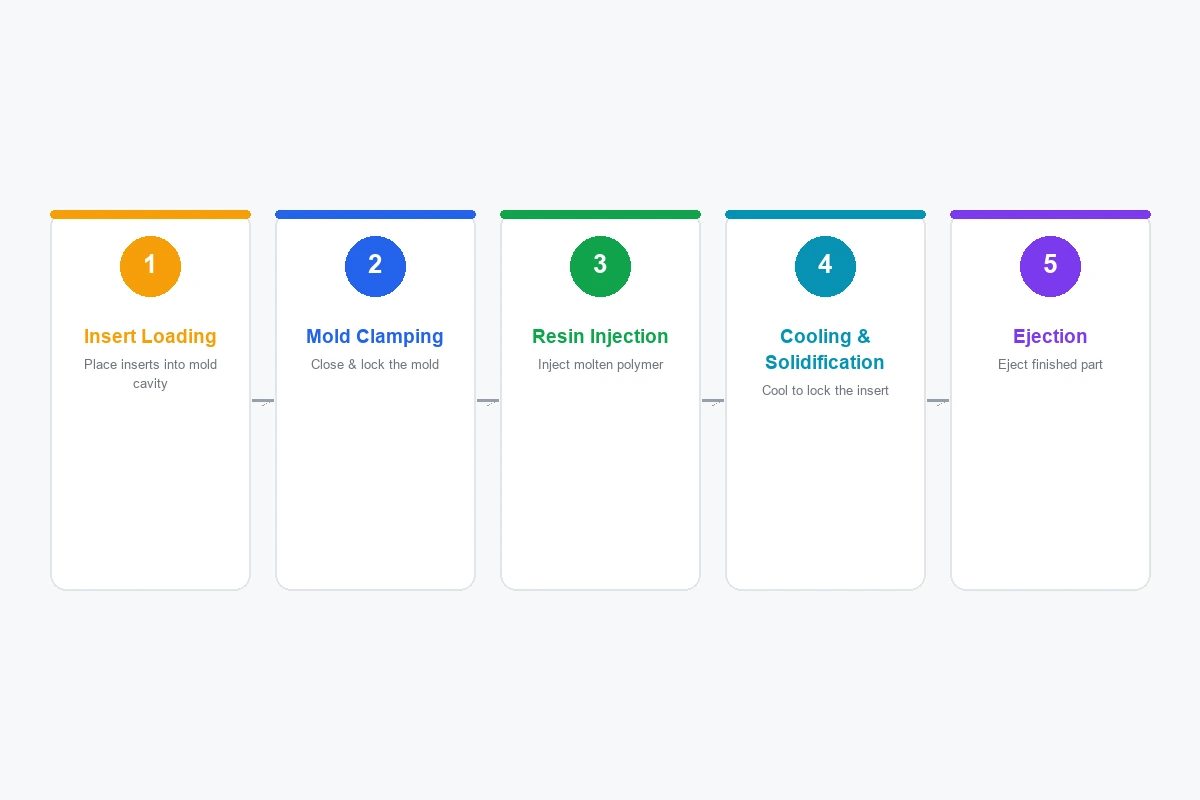
The core mechanics of insert molding rely on placing a solid pre-formed part directly into the mold tooling. The process follows a precise sequence:
Insert Loading
Operators or robotic arms place metal or non-metal inserts into designated mold cavity locations.
Mold Clamping
The mold closes, using mechanical pressure to keep the insert locked in position.
Cooling and Solidification
Heat transfers out of the polymer matrix, locking the knurled, undercut, or threaded insert in place.
Ejection
The finished insert molded components clear the core side of the mold, ready for quality checks or secondary operations.
Insert Molding vs Traditional Injection Molding
Standard plastic injection molding forms parts strictly from raw resin. Features like internal threads or electrical contact pins must be added later through heat staking, ultrasonic welding, or manual assembly.
Insert molding combines part forming and fastener installation into a single cycle. It cuts labor costs, avoids post-process alignment errors, and delivers superior pull-out resistance compared to post-molded press fit inserts.
Insert Molding vs Overmolding
Engineers frequently conflate insert molding with overmolding, yet their mechanical execution differs:
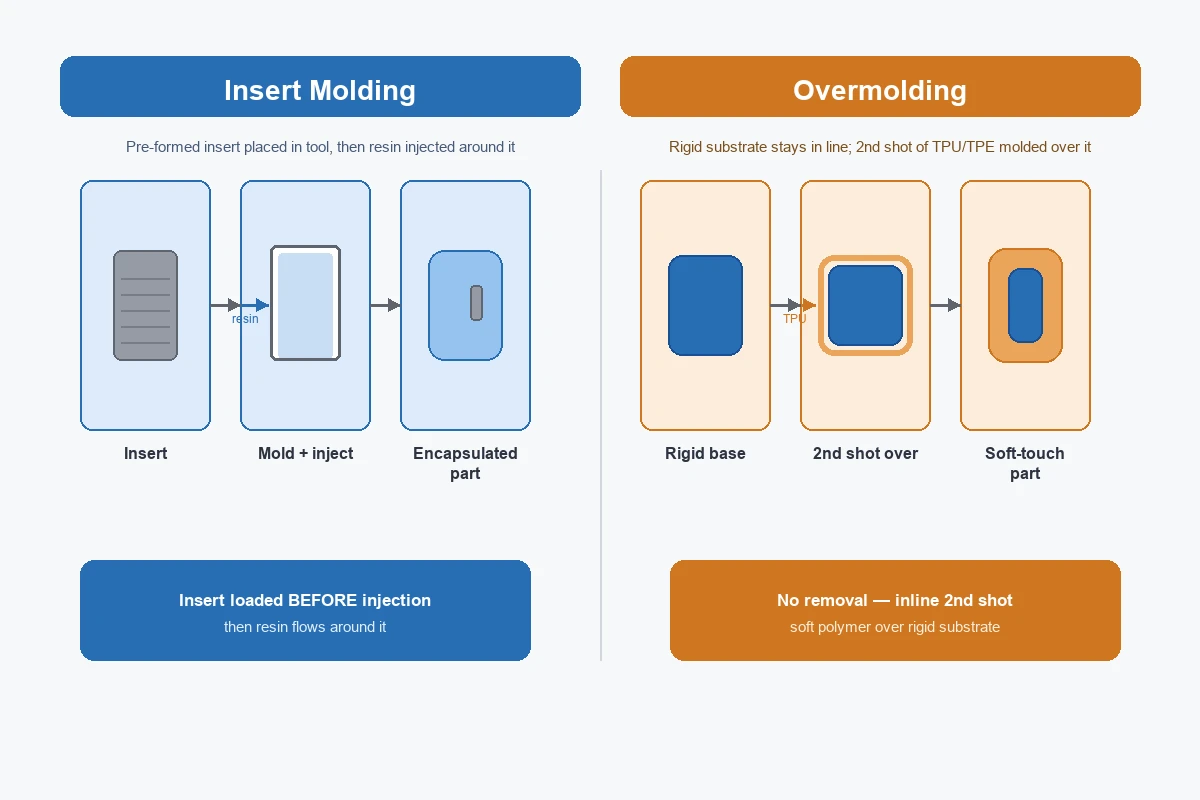
Insert Molding: Features a non-plastic or pre-formed hard plastic component (the insert) placed into the tool before resin injection.
Overmolding: Involves a multi-shot process where a flexible or secondary polymer (like TPU or TPE) is molded directly over an existing rigid plastic substrate without removing it from the manufacturing line.
Key Benefits of Insert Molding
Using insert molding solutions delivers immediate mechanical and economic advantages across production runs:
- Reduced total part count by eliminating screws, rivets, and adhesives.
- Superior pull-out and torque resistance via knurled or grooved metal surfaces.
- Enhanced electrical insulation and moisture sealing around sensitive contacts.
- Minimized assembly reduction steps, cutting overall manufacturing lead times.
The Complete Insert Molding Process
Part Design & DFM Review
Every project starts with a detailed Design for Manufacturability (DFM) analysis. Engineers evaluate wall thickness consistency, draft angles, gate locations, and structural support around the insert. Identifying prospective sink marks, air traps, or insert displacement at this stage prevents costly mold modifications later.
Material Selection
Choosing the right combination of resin and insert substrate is vital. Thermal expansion coefficients between plastic and metal inserts must align to prevent micro-cracking during cooling. Standard choices range from general-purpose thermoplastics to high-temperature engineering plastics like PEEK.
Insert Preparation
Raw inserts require thorough preparation. Surfaces must stay free of cutting oils, oxidation, or debris. Pre-heating brass inserts or steel inserts reduces thermal shock when molten plastic contacts the cold metal, yielding better interface bonding and fewer internal stress voids.
Mold Design & Tooling
Insert molding tooling features custom retention pins, magnetic holds, or vacuum channels to lock inserts tightly inside the mold cavity. Toolmakers construct core and cavity plates from hardened tool steel to withstand high injection pressure and prevent flash near the insert interface.
Insert Placement (Manual vs Automated)
High-volume manufacturing relies on robotic pick-and-place automation to maintain consistent cycle time parameters and prevent human error. Conversely, rapid insert molding and low-volume production often utilize manual insert loading to save on automation setup costs.
Plastic Injection & Encapsulation
Once locked, the machine injects plastic resin under precise speed, pressure, and temperature profiles. The plastic encapsulates retention features like undercuts, hex heads, or diamond knurling, creating an unyielding mechanical lock once solidified.
Cooling, Ejection & Inspection
Targeted cooling lines built into the mold tooling dissipate heat uniformly. After solidification, ejector pins push the completed insert molded plastic parts out of the mold. Operators or optical sensors inspect the insert placement accuracy before resetting the cycle.
Secondary Operations & Quality Control
Post-molding steps may include flash trimming, electrical continuity testing, or automated dimensional inspection. Parts bound for high-reliability applications undergo pull-out and retention testing to verify long-term performance under stress.
Types of Insert Molding Technologies
Metal Insert Molding
Metal insert molding dominates the hardware, automotive, and industrial markets. Encapsulating brass, aluminum, or stainless steel inserts within plastic housings provides rigid thread anchoring and localized load-bearing strength without adding excess structural weight.
Threaded Insert Molding
Threaded insert molding embeds female or male threaded fasteners directly into the structural resin matrix. It provides vastly superior strip resistance compared to self-tapping screws driven directly into raw plastic bosses.
Brass Insert Molding
Brass insert molding is widely preferred for its excellent thermal conductivity, ease of machining, and natural corrosion resistance. Brass inserts lock securely into thermoplastics like nylon and ABS, making them standard for electrical connectors and fluid-handling equipment.
Stainless Steel Insert Molding
When high tensile strength, extreme heat endurance, and harsh chemical resistance are required, stainless steel insert molding is the go-to choice. It is widely specified for medical insert molding, defense insert molding, and marine equipment.
Related: Continuous Fiber 3D Printing: Reinforced Additive Manufacturing (2026)
Insert Molding Materials Guide
| Material Category | Resin Name | Key Mechanical Properties | Common Applications |
| Commodity Plastics | Polypropylene (PP) | Chemical resistance, low cost, high fatigue strength | Automotive trim, consumer goods, closures |
| General Engineering | ABS | High impact resistance, structural rigidity, easy processing | Electronics housings, automotive interior parts |
| High Performance | Nylon (PA6/PA66) | Excellent wear resistance, high tensile strength | Structural brackets, gears, threaded inserts |
| Optical / Structural | Polycarbonate (PC) | Exceptional clarity, high heat resistance, impact strength | Display screens, protective housings |
| Ultra Polymers | PEEK | Superior thermal stability, chemical inertness | Aerospace components, medical devices |
Thermoplastics for Insert Molding
Thermoplastics soften under heat and harden upon cooling, allowing repeatable thermal cycling. Their fast cycle time metrics and broad chemical compatibility make them ideal candidates for precision insert molding.
Engineering Plastics
Engineering plastics withstand continuous mechanical stress, elevated operating temperatures, and aggressive chemical exposure better than commodity polymers.
Nylon (PA)
Nylon provides superior mechanical strength, abrasion resistance, and self-lubricating properties. PA6 and PA66 are widely selected for threaded insert molding applications where mechanical torque and pull-out resistance are critical.
ABS
ABS combines toughness, structural stiffness, and dimensional stability. Its low shrinkage rate makes it ideal for precision custom insert molded parts that require tight manufacturing tolerances.
Polycarbonate (PC)
Polycarbonate delivers extraordinary impact strength and heat resistance. Engineers select PC when structural housings need transparent view ports or rugged protection around metal contact pins.
Polypropylene (PP)
Polypropylene offers moisture resistance and high chemical stability at a competitive cost point. It works well with stainless steel inserts in fluid handling and marine hardware.
PEEK
PEEK handles continuous operational temperatures exceeding 250°C while maintaining exceptional mechanical strength. It is frequently specified for medical insert molding and aerospace insert molding projects.
TPU & TPE
Thermoplastic polyurethane (TPU) and thermoplastic elastomers (TPE) deliver high flexibility, shock absorption, and tactile grip. They are often molded around hard metal frames to create vibration-dampening components.
Silicone Materials
Liquid silicone rubber (LSR) retains its physical properties across flexible thermal operating windows (-50°C to 200°C+). It is ideal for medical devices and automotive gasket seals.
Metal Inserts Used in Insert Molding
Brass Inserts
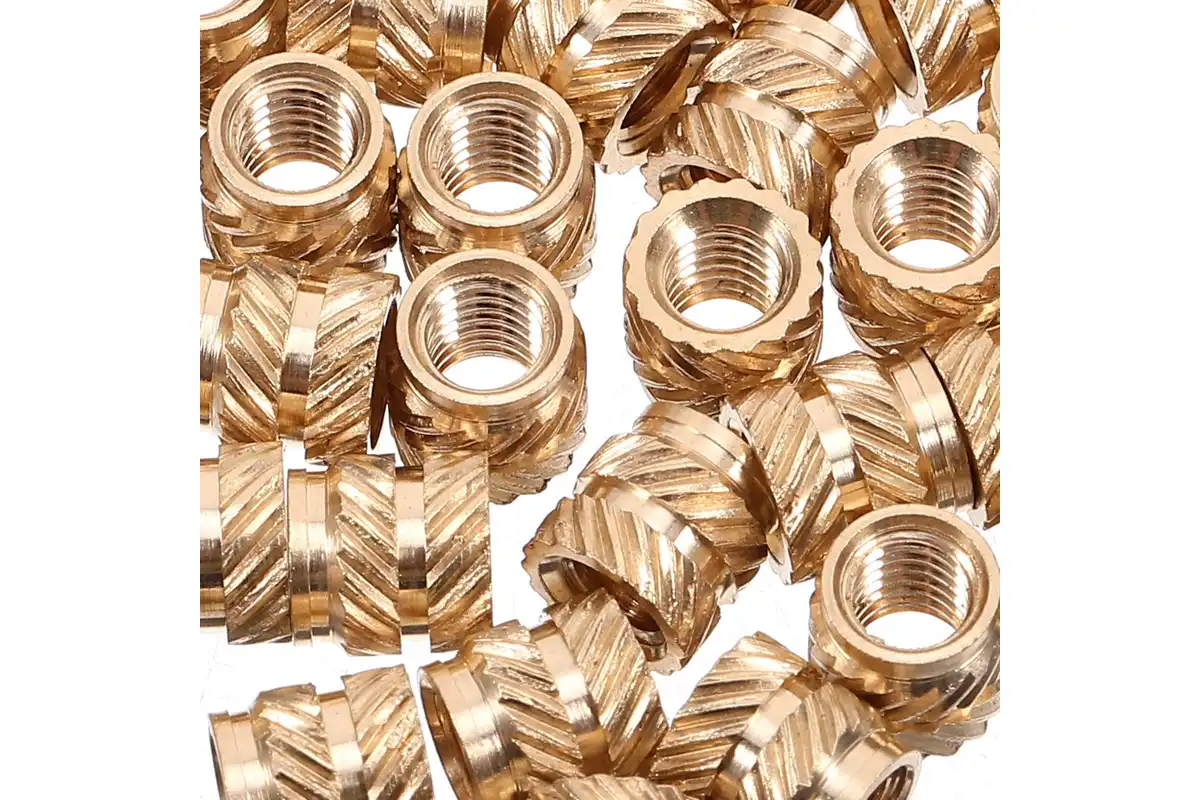
Brass inserts are the industry baseline for cost-effective, high-precision threaded insert molding. Their relative softness allows toolmakers to cut intricate knurling patterns that lock firmly into molten resin.
Stainless Steel Inserts
Stainless steel inserts prevent oxidation and handle extreme physical stress. They are necessary for surgical instruments, marine hardware, and high-voltage EV battery insert molding components.
Aluminum Inserts
Aluminum inserts provide exceptional strength-to-weight ratios. Their lightweight characteristics benefit aerospace insert molding and robotics insert molding applications where weight reduction drives system efficiency.
Steel Inserts
Hardened steel inserts provide maximum shear and yield strength. They are integrated into heavy industrial equipment where component failure under physical load is unacceptable.
Threaded Inserts
Threaded inserts feature aggressive external knurling, helical grooves, or hex heads to maximize torque-out and pull-out strength once encapsulated in structural plastic over metal molding processes.
Electrical Contact Inserts
Copper and brass contact pins are directly molded into connector housings. Injection insert molding seals around the pins, preventing fluid ingress while ensuring reliable electrical insulation.
Magnets, Bushings & Bearings
Molding plastic around permanent magnets, bronze bushings, or ball bearings eliminates post-process pressing operations. This ensures precise axial alignment within motor housings and dynamic mechanical assemblies.
Insert Molding Design Guide
Design Guidelines
Successful insert molding requires balancing thermal contraction rates between metal and plastic. Always design uniform wall sections around inserts to distribute mechanical stresses evenly and prevent micro-cracks during resin solidification.
Wall Thickness Recommendations
- General Rule: Maintain plastic wall thickness around the insert equal to at least 50–100% of the insert’s outer diameter.
- Thin Walls: Lead to residual stress, hoop stress cracking, and cosmetic sink marks.
- Thick Walls: Extend cycle time parameters and introduce void risk.
Insert Placement Best Practices
Position inserts parallel to the mold opening direction whenever possible. Utilize positioning pins, shut-off land areas, or internal magnets within the core to keep the insert stable against high injection pressures.
Draft Angles
Apply a minimum draft angle of 1° to 2° on all plastic features parallel to the draw line. Draft allows clean mold release without scraping the freshly molded plastic surfaces or displacing embedded inserts.
Corner Radius & Rib Design
Incorporate continuous radii (minimum 0.5 mm) on internal corners. Sharp edges generate localized stress concentrations that invite cracking around hard metal inserts. Use structural ribs to support long bosses without adding thick wall sections.
Bosses Around Inserts
When designing plastic bosses to hold inserts:
Boss Outer Diameter = 2 x Insert Outer Diameter
Wall Thickness around Insert = 0.5 x Insert Outer Diameter
Ensure the boss extends slightly past the top edge of the insert to lock it securely down into the substrate.
Gate & Runner Design
Position mold gates so the incoming molten resin stream does not hit the insert directly. High injection force can deflect, displace, or tilt small inserts, causing dimensional inaccuracy or mold flash.
Cooling Considerations
Incorporate uniform cooling channels around mold cavities to prevent thermal warping. Because metal inserts dissipate heat faster than plastic resin, cooling channel placement must balance thermal extraction across the part profile.
Manufacturing Tolerances
Achieving dynamic dimensional accuracy depends on maintaining tight insert manufacturing tolerances.
- Insert Placement Tolerance: ±0.05 mm (Automated loading) / ±0.10 mm (Manual loading)
- Standard Plastic Tolerance: ±0.1 mm to ±0.2 mm depending on shrinkage rates.
Common Design Mistakes to Avoid
- Neglecting undercuts or knurling on inserts, resulting in weak torque resistance.
- Designing overly thin plastic walls around heavy metal inserts.
- Placing inserts too close to edge margins, causing sidewall fracture under stress.
- Forgetting shut-off surfaces, leading to resin flash inside internal threads.
Related: Laser Cutting Services: Process, Materials, Tolerances, Design Guide, Applications & Cost (2026)
Insert Molding Tooling & Mold Design
Prototype Tooling
Prototype tooling uses soft aluminum or pre-hardened steel mold cavities. It offers lower initial tooling cost structures and quick turnarounds, ideal for validating insert placement accuracy and running preliminary pull-out testing.
Production Tooling
Production tooling relies on hardened tool steels like H13 or S7. Capable of executing over 1,000,000 cycles, these multi-cavity tools integrate automated insert loading mechanisms and optimized cooling lines.
Mold Cavities
The choice between single-cavity and multi-cavity molds dictates output volume. Multi-cavity production tooling requires balanced runner systems to deliver identical resin pressure to every cavity simultaneously.
Hot Runner vs Cold Runner
Hot runner systems eliminate sprue and runner waste, maintaining consistent melt temperatures directly up to the gate. Cold runner systems cost less upfront but generate scrap that must be recycled or reground.
Mold Material Selection
- Aluminum (7075): Fast machining, ideal for prototype tooling (1,000–10,000 shots).
- P20 Steel: Standard for medium-volume production runs (100,000+ shots).
- H13 Hardened Steel: Required for abrasive engineering plastics or high-volume automated molding lines (1,000,000+ shots).
Tool Maintenance
Regular mold maintenance—including cleaning core shut-off faces, inspecting locating pins, and re-lubricating moving slides—prevents tool wear caused by hard metal inserts hitting mold surfaces.
Advantages of Insert Molding
Reduced Assembly Operations
By directly encapsulating components inside the mold cavity, insert molding eliminates post-molding assembly steps, such as ultrasonic welding, heat staking, or manual bolt tightening.
Improved Mechanical Strength
Resin flows directly around mechanical undercuts, diamond knurls, and hex geometry on the insert. This structural grip far exceeds the torque and pull-out resistance of press fit inserts.
Better Electrical Insulation
Encapsulating electrical busbars, sensor insert molding modules, and copper pins within dielectric plastics prevents short circuits, shields against environmental moisture, and eliminates manual potting operations.
Lightweight Components
Combining localized metal structural reinforcement with lightweight plastic bodies produces strong yet lightweight components for the automotive, aerospace, and defense sectors.
Improved Corrosion Resistance
Encapsulating standard steel inserts inside protective engineering plastics shield sensitive metals from harsh weather, aggressive chemicals, and dynamic oxidation.
Enhanced Product Reliability
Fewer mechanical joints directly lower component failure rates. Solid, single-piece insert molded components resist vibrational loosening better than traditional fastener assemblies.
Lower Manufacturing Costs
Although initial tooling investment is higher, reducing labor requirements, part counts, and assembly times yields lower overall manufacturing costs at scale.
Limitations of Insert Molding
Higher Initial Tooling Cost
Custom insert molding tooling requires precise retention pins, shut-off zones, and dynamic core features. This increases upfront engineering and machining expenses compared to basic injection molding tools.
Design Constraints
Engineers must accommodate strict wall thickness minimums, insert loading clearances, and precise resin shrinkage rates, which limits geometric flexibility in certain thin-wall designs.
Insert Alignment Challenges
If an insert shifts during high-pressure injection, the part will fail dimensional inspection. Poor retention design can cause tool damage if a displaced insert jams the closing mold plates.
Material Compatibility
Divergent coefficients of thermal expansion (CTE) between metallic inserts and plastic matrices can create residual stress. High thermal mismatches can cause micro-cracking over time.
Production Considerations
Manual insert loading slows cycle times and increases labor costs, whereas automated loading requires capital-intensive robotic equipment.
Related: Micro SLA 3D Printing: Technology, Materials, Accuracy, Applications & Cost Guide
Common Insert Molding Defects and Solutions
| Defect Type | Root Cause | Preventative Action / Solution |
| Insert Misalignment | Resin pressure displacing insert; loose locating pins | Optimize gate location; tighten pin tolerances; implement magnetic or vacuum retention |
| Flash | Poor shut-off tolerances around the insert | Re-machine mold shut-offs; adjust insert dimensional tolerances |
| Short Shots | Mold temperature too low; insufficient injection pressure | Increase melt/mold temperatures; optimize injection speed profiles |
| Sink Marks | Excessive wall thickness around insert core | Maintain uniform wall thickness; optimize packing pressure and time |
| Warpage | Uneven cooling; differential CTE between metal and plastic | Adjust cooling circuit flow; select lower-shrinkage engineering plastics |
| Cracking | Residual hoop stress caused by tight plastic shrinkage around metal | Pre-heat metal inserts; increase boss wall thickness; add corner radii |
Insert Molding Applications by Industry
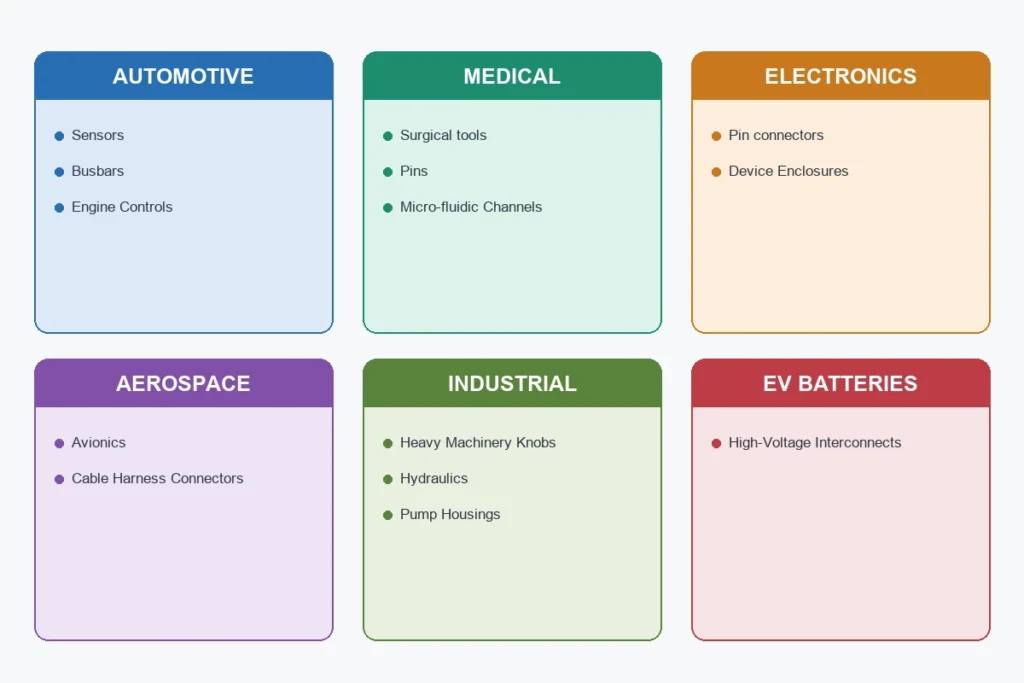
Automotive Components
Automotive insert molding powers modern vehicle architecture. Essential parts include engine control module housings, ignition coils, steering wheel switches, and structural bracket assemblies.
Medical Devices
Precision medical insert molding produces surgical tools, needle hubs, catheter connectors, and diagnostic equipment. Using biocompatible resins and stainless steel inserts ensures high structural integrity and cleanroom compliance.
Consumer Electronics
Smartphones, wearable tech, and handheld devices rely on consumer electronics insert molding for robust antenna frames, USB-C port connectors, threaded camera mounts, and battery contacts.
Aerospace Components
Aerospace insert molding helps meet demanding weight-reduction targets. Applications include light avionics housings, internal duct brackets, and structural frame fittings using PEEK or polyimide matrix materials.
Industrial Equipment
Industrial insert molding applications include heavy-duty control knobs, hydraulic valve bodies, pump housings, and power tool handles that withstand high torque and continuous vibration.
Robotics
Robotics insert molding combines lightweight structural frames with hardened steel inserts, brass bushings, and embedded magnetic contacts for articulated joints and end-effectors.
EV Battery Components
EV battery insert molding produces high-voltage busbar encapsulations, sensor insert molding harnesses, and battery module spacers. Insulating live conductive copper within engineering plastics prevents thermal runaway and electrical arcing.
Connectors & Sensors
Precision sensor insert molding seals sensitive electronics inside watertight plastic sleeves. Solid encapsulation protects environmental sensors, pressure transducers, and automotive wiring harnesses from fluids and vibration.
Defense Applications
Defense insert molding requires mil-spec tolerances and high structural reliability. Applications include ruggedized communication gear, radar housings, and guidance system brackets built to survive extreme field environments.
Insert Molding vs Other Manufacturing Processes
Insert Molding
Overmolding
Insert molding encapsulates a solid metal or non-plastic part in one injection cycle. Overmolding molds a second flexible layer (like TPU) over an existing rigid plastic base in a multi-shot process.
Insert Molding
Injection Molding
Standard injection molding forms all-plastic geometries without embedded components. Insert molding embeds functional metal, electronic, or structural inserts directly during the molding cycle.
Insert Molding
CNC Machining
CNC machining subtracts material from solid blocks. While CNC machining excels at low volumes, insert molding delivers significantly lower unit costs and faster production speeds for high-volume complex assemblies.
Insert Molding
Die Casting
Die casting injects molten metal into steel tools. Insert molding uses plastic matrices reinforced with targeted metal inserts, yielding lighter components with superior electrical insulation.
Insert Molding
3D Printing
3D printing enables rapid prototyping without tooling expenses, but lacks the material density, structural strength, tight tolerances, and fast cycle times of production insert molding.
Insert Molding
Ultrasonic Welding
Ultrasonic welding joins separate plastic components using high-frequency vibrational heat. Insert molding eliminates post-mold welding steps by forming the component around inserts in a single operation.
Insert Molding
Adhesive Bonding
Adhesive bonding relies on liquid glues to join parts, requiring cure times and surface preparation. Insert molding creates a superior mechanical bond instantly during part cooling.
Insert Molding
Press-Fit Inserts
Press-fit inserts are forced into pre-molded plastic holes after cooling. Insert molding achieves far higher pull-out and torque resistance by shrinking molten resin directly around textured metal undercuts.
Prototype vs Production Insert Molding
Rapid Insert Molding
Rapid insert molding uses 3D printed or aluminum tooling to produce 10 to 100 functional prototype insert molded parts. It allows design teams to validate mechanical fit, torque strength, and resin flow before committing to mass production tooling investments.
Low-Volume Production
Low-volume production relies on soft steel tooling and manual insert loading. Ideal for mid-tier production volumes (1,000 to 10,000 units), this approach keeps initial capital expenditures low while delivering end-use engineering parts.
High-Volume Manufacturing
High-volume production uses hardened multi-cavity steel molds, automated robotic loading, and hot runner setups. It maximizes throughput, minimizes cycle times, and lowers per-unit costs for mass production runs.
When to Transition to Production Tooling
Transition to production tooling when part designs are fully locked, pull-out testing is complete, and order volumes reach a point where savings on unit costs outweigh the higher upfront tooling investment.
Related: Custom Metal 3D Printing Services: Materials, Pricing & Lead Times Explained
Insert Molding Cost Guide
Factors That Affect Pricing
- Tooling Complexity: Single-cavity versus multi-cavity production tooling configurations.
- Insert Loading Method: Manual insert loading versus automated pick-and-place systems.
- Material Selection: Commodity resins versus high-cost engineering plastics like PEEK.
- Tolerances & Quality Standards: Standard commercial tolerances versus tight-tolerance medical or aerospace specifications.
Tooling Costs
Prototype tooling costs range from $1,500 to $5,000. Complex multi-cavity production tooling made from hardened tool steel ranges between $10,000 and $50,000+, depending on part geometry and automated features.
Material Costs
Plastic resin costs range from $2/kg for commodity polypropylene to over $100/kg for specialty engineering polymers like PEEK. Custom brass inserts, stainless steel inserts, or stamped metal pins add to the overall bill of materials.
Production Volume
As production scale increases, upfront tooling costs amortize across more parts, significantly driving down the final cost per part.
Insert Complexity
Off-the-shelf threaded inserts cost cents per unit. Custom CNC-machined metal inserts or complex stamped electronic busbars increase raw insert procurement costs.
Secondary Operations
Secondary operations—such as post-mold machining, specialized surface finishing, continuous continuity testing, or custom packaging—add incremental per-part labor costs.
Cost Reduction Tips
- Standardize on off-the-shelf brass threaded inserts rather than custom metal geometries.
- Keep wall thicknesses uniform across bosses to prevent sink marks and shorten cycle times.
- Work with an experienced insert molding company early to refine Design for Manufacturability (DFM).
- Transition to automated molding for high-volume orders to minimize labor costs.
Quality Assurance & Inspection
Dimensional Inspection
Coordinate Measuring Machines (CMM) and optical vision systems inspect key dimensions, ensuring insert alignment meets engineering drawings and tolerance specs.
Material Verification
Spectroscopy and Melt Flow Index (MFI) testing confirm raw plastic resin and metal alloy chemistry align with specified engineering grades.
Pull-Out & Retention Testing
Destructive mechanical testing measures the exact torque-out and pull-out forces required to strip embedded threaded inserts or pull pins out of the plastic matrix.
Functional Testing
Electrical continuity testing, pressure decay leak checks, and environmental stress screening confirm assemblies perform reliably in the field.
Visual Inspection
Automated machine vision or trained inspectors check parts for flash, air traps, sink marks, short shots, and insert misalignment.
Industry Standards & Certifications
Leading manufacturing facilities operate under strict quality inspection services:
- ISO 9001: General manufacturing and quality management standards.
- ISO 13485: Strict quality compliance for medical insert molding.
- IATF 16949: Rigorous quality management systems for automotive insert molding components.
How to Choose the Right Insert Molding Manufacturer
Engineering Expertise
Select an insert molding manufacturer with a proven track record of handling complex DFM reviews, structural boss optimization, and thermal stress mitigation.
Material Capabilities
Verify that your insert molding supplier works with a broad portfolio of engineering plastics, elastomers, and diverse metal insert materials.
Tooling Experience
In-house tooling capability allows rapid mold modifications, routine tool maintenance, and tight control over core shut-off tolerances.
Production Capacity
Ensure your chosen insert molding company offers flexible production capabilities, scaling seamlessly from rapid insert molding prototypes to high-volume automated runs.
Quality Certifications
Confirm the supplier holds essential industry certifications (such as ISO 9001, ISO 13485, or IATF 16949) to ensure full traceability and consistent quality control.
Global Shipping & Lead Times
Choose a manufacturing partner with reliable logistics networks to ensure your parts arrive on schedule, whether sourced locally or through international manufacturing facilities.
Why Choose Lava3DP for Custom Insert Molding Services
Lava3DP combines state-of-the-art manufacturing infrastructure with deep engineering expertise to deliver reliable custom insert molding services tailored to your exact application.
Design for Manufacturability (DFM) Support
Our expert engineering team performs thorough DFM evaluations on every project, identifying potential mold defects, optimizing gate locations, and refining boss designs before cutting steel.
Rapid Prototyping Before Production
Validate your part geometries, verify fit, and run physical pull-out testing quickly with our rapid insert molding and prototyping solutions.
Injection Molding & Rapid Tooling Services
We offer cost-effective rapid tooling for prototype runs alongside hardened steel production tooling built for high-volume manufacturing.
CNC Machining for Custom Inserts
Need unique metal hardware? We leverage high-precision CNC machining capabilities to produce custom inserts designed specifically for your injection insert molding assemblies.
Engineering Material Selection Assistance
From commodity resins to ultra-polymers like PEEK, our engineers help you select the ideal plastic matrix and metal substrate for your performance requirements.
Low-Volume to Mass Production
Whether you need a low-volume run of 100 units or high-volume production scaling into millions, our manufacturing lines scale flexibly to support your growth.
Strict Quality Control
Every production lot undergoes rigorous inspection—including CMM checks, pull-out testing, and visual verification—backed by ISO-certified quality management systems.
Global Manufacturing & Worldwide Delivery
With streamlined manufacturing setups and reliable global logistics networks, Lava3DP delivers precision components straight to your facility, anywhere in the world.
Instant Online Quote
Ready to begin? Upload your 3D CAD models to Lava3DP today to receive a comprehensive Design for Manufacturability analysis and an instant online quote!
Related Manufacturing Services from Lava3DP
Injection Molding Services
Full-scale plastic injection molding for simple and complex geometries, supported by advanced process monitoring and a wide array of resin choices.
Rapid Tooling
Aluminum and soft steel tooling setups designed to bridge the gap between initial prototype validation and mass production manufacturing.
3D Printing Services
CNC Machining
High-precision 3-, 4-, and 5-axis CNC milling and turning services for custom metal hardware, inserts, and production components.
Vacuum Casting
Urethane vacuum casting in silicone molds, ideal for delivering high-quality, low-volume plastic prototypes with production-grade surface finishes.
Overmolding Services
Multi-shot and transfer overmolding solutions for adding soft-touch TPE grips, protective rubber seals, or dynamic multi-color layers to rigid plastic parts.
Product Development & Rapid Prototyping
End-to-end engineering support—from initial concept sketches and CAD modeling to functional prototype testing and production scale-up.
Surface Finishing Services
Comprehensive post-processing options including bead blasting, anodizing, painting, plating, laser etching, and custom texture matching.
Ready to Manufacturing with LAVA3dp?
Upload your CAD file today and receive instant pricing, expert engineering support, fast production, and worldwide delivery.
Get an Instant Quote →Frequently Asked Questions
What is an insert in molding?
An insert is a pre-formed component—typically made of brass, stainless steel, aluminum, or high-temperature plastic—placed inside a mold cavity before resin injection. Molten plastic flows around the insert, securely embedding it within the finished part upon cooling.
What is the difference between insert mold and over mold?
Insert molding embeds non-plastic or pre-formed hard components into a plastic housing during a single injection cycle. Overmolding is a multi-shot process where a secondary material (usually a flexible elastomer like TPE or TPU) is molded over an existing plastic substrate.
Which materials are commonly used for insert molding?
Common resin matrices include engineering thermoplastics like Nylon (PA), ABS, Polycarbonate (PC), Polypropylene (PP), and high-performance polymers like PEEK. Inserts are typically machined or stamped from brass, stainless steel, aluminum, or carbon steel.
What are the main advantages and limitations of insert molding?
Key advantages include reduced assembly costs, higher thread and pull-out strength, improved structural integration, and compact part design. Limitations involve higher upfront tooling costs, tighter design constraints, and the need to prevent insert movement during injection.
How much does custom insert molding cost?
Costs depend on production volume, material choices, insert complexity, and tooling setups. Prototype tooling ranges from $1,500 to $5,000, while high-volume multi-cavity production steel tooling costs between $10,000 and $50,000+.
What products are commonly manufactured using insert molding?
Widely manufactured products include threaded plastic knobs, automotive sensor housings, medical surgical tools, electrical busbars, consumer electronics enclosures, and high-voltage EV battery connectors.
Can insert molding be used for prototypes?
Yes. Using rapid insert molding with soft aluminum tooling or 3D-printed mold inserts allows manufacturers to produce functional prototype parts for physical testing and design validation before investing in production tooling.